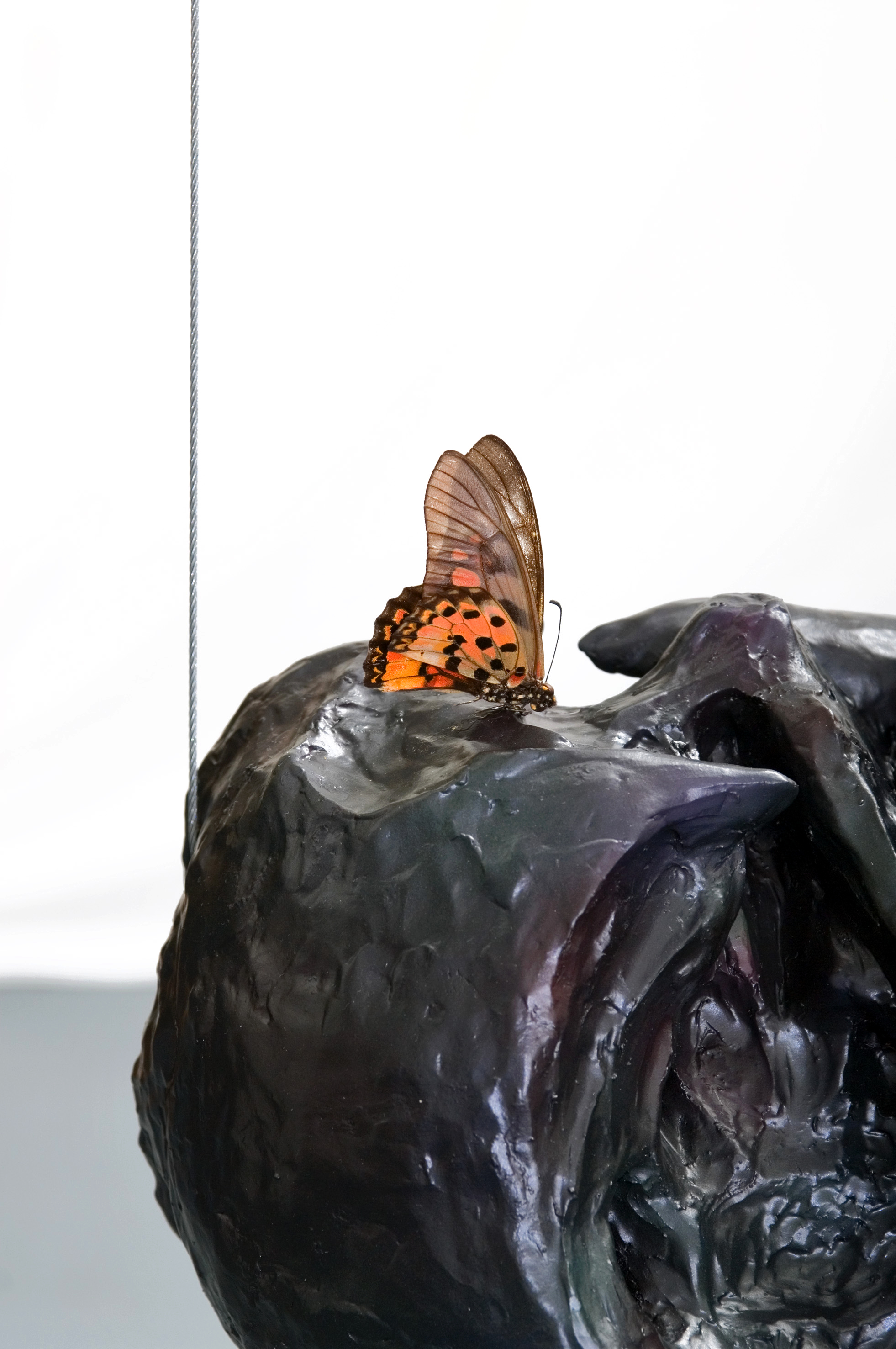
I saw a butterfly on the Tube the other day. To be precise, it was about 10:30 a.m. on a grey Tuesday morning. I stepped onto the Northern Line heading south and looked to my right, towards the loud, expectant low grumble. A young woman walked past, dressed in ‘new beige.’ Her white shoes squeaked assertively.
As she veered to her left, she left in her wake a butterfly. The butterfly was moving, drifting to and fro, fluttering in the air currents that surely had their own language—their own special subterranean paths. As I watched, the butterfly flew perilously close to the tracks; the depth of the trench versus the tiny size of the butterfly gave a strange sense of vertigo.
Is there anyone in this world who does not think about life in this way? Confusing, abandoned, and out of place. From this confusion, this messy collision of feelings and facts, artists find the kernel of every idea. They navigate life’s shifting winds—these pulls and pushes—dragged down by a sense of worried existence, weaving all of it into their work with technical skill—or brute force. From that mess, they create a kind of ladder—a ladder that, in the corner of their eye, they imagine could take them to the moon.
Yet artists somehow know, deep down, that what they are searching for is not simply creation for others but reflection—an understanding of themselves, and that in some way all the navigating, questioning, crafting, and skill is itself some kind of necessary message—a kind of labour that is a reflection of our struggle.
This butterfly, which for all intents and purposes resembles a bait dangling on a fishing line, becomes an easy metaphor for all of us. It’s a gentle, tragic reminder of our fragile lives. Born from a twinkle in nature’s eye, it mirrors our own creative path: a ladder rising from chaos, a struggle between the pull of imagination and the certain weight of death.
At the journey’s end, we dance off into the void, into darkness, yet it is not until we reach that darkness—as the butterfly did, flying down into the tunnel—that its dance (its artwork) becomes truly significant. It was only when its shape and form disappeared into the darkness, when it rejoined the place it came from, that I could reflect on and appreciate the disjointed poetry of this dance—the end object, the memory.
“And I, infinitesimal being, drunk with the great starry void, likeness, image of mystery—I felt myself a pure part of the abyss.”
— Pablo Neruda
Image : Richard Nik Evans, Red (detail), 2006
 A MOMENT OF ETERNAL NOISE