The institutional tiles beneath my feet screamed public swimming pool, and if that wasn’t enough, the huge red hole—like the orifice of some great beast—presented itself to me. The echo of children’s screams spilled from inside the glowing plastic trumpet. The hallowed space of the 1990s water park was calling.

I was wasting time—daydreaming as usual—while trying to gather my New Year notes. List writing, editing, and rewriting is one of my main pastimes. I spend more time doing this than any other part of my practice. Why? Sections lead to lists, lists lead to projects, projects lead to new sections. They form an interlocking map of ideas, constantly wavering between procrastination and efficiency. At what point do notes and lists stop being signposts to work and become work in themselves?

There’s no feeling like being in a public swimming pool in the early 1990s. The clammy cold warmth, strangers’ bodies, the endless parade of counters just slightly too high to see over. Flip-flops and discarded towels, stray plasters and rubber key bracelets.

My local Midlands pool, minutes away from Birmingham’s notoriously tangled Spaghetti Junction, was also blessed with a terrifying high diving board and waterslides of various speeds, sizes, and angles. Even as a memory, I can taste the tepid, chlorinated water.

As I wait in line on the stairs for one of the slides, I dream not of the Space Invader crisps and soft drinks that awaited me at the end of the ride—the gold I’d been imagining on the drive there—but of potential dangers. Jagged edges of plastic, where fibreglass sheets are joined, stare at me like paper cuts, waiting for the opportunity to slice my innocent, exposed skin. Each step up gives me a new perspective, a new chance to turn back. And once I’ve entered this dark, liminal space, what could possibly be around the corner? Who knows—the tunnel disappears after only a few feet, a tunnel I know must leave the building to return, hopefully, into the plunge pool. How could something like this possibly exist? How could someone make this? What engineer, what architect, my raw child mind asks itself, could have created such an octopus monster, a suburban Kraken?

I tell myself I make lists to create green spaces. These spaces are times when I can work on a project; everything else in life is dedicated to creating them. They are periods when all the art is made—this, now, this moment I write, is a green space. They are not just times when I make a sculpture or write something; they are spaces sculpted and formed by everything that went into making them: the amount of money I could make, the materials I could find, the space I work in, and of course the ideas that go into them. These lists are the tubes that lead to the green space. They provide the psychological framework within which the work is made. Each and every time, I try to list the way I got there, to preserve the journey, to hopefully replicate it next time. It’s like trying to create a map from the present moment to the work, to a future me, which of course then becomes the present moment.

To get to the top of the Hydrofume—the name given to the slide that incorporated both a trip outside and a vertical drop—I had to walk up painted concrete steps, covered in a slim rubber mat to prevent accidents. Strangers revealed their personalities as they passed: some with confidence, others with trepidation, all different heights and weights, all in tight, colourful Speedos. At around eleven years old, the only time I saw a stranger’s semi-naked body was on television—a time before the internet, even before Page 3, when kissing was more familiar when done to an extra-terrestrial than to other humans. In the early 1990s, tattoos were rare and always darkly exotic. All I knew of them was that they reminded me of lists and science diagrams, combined with a dark foreboding probably brought about by Robert De Niro’s painted torso in Cape Fear. They seemed like strange labels, lists pointing towards hearts and bones, sailing ships and ropes.

Tattoos are made under the guise of signifiers: they are meant to mean something, to point to something else, whether that meaning is deliberate or not. Most often the message travels from the outside inward—from naval tattoos like Hold Steady across the knuckles to personal relationships, birth dates, or simply mum. They seem to point towards the heart. Somehow their meaning is created through a kind of biological osmosis, as if ink pumped through the dermis, combined with blood, could take the outside world of words, images, and diagrams and push them closer to the heart—the resting place of the soul.

These are thoughts I have now as I think of myself, arms crossed, hurtling through a small plastic tube. I remember even then being aware of the thickness of the plastic—so thin that light shone through it. This membrane was my second skin, protecting me from the outside world. Freefall, turning, completing a circle, then re-entering the building. In the warm, intestine-like interior, I anticipated—or imagined—the cold outside world. I screwed my eyes shut, praying for the experience to be over, for the destination to be reached. The internal scream—mum, are we nearly there yet?—reached new watery lows.

I look back at the computer in front of me. The twists and turns of lists give way to more lists—where do they point? Like the plot of a bad sequel to Memento, it quickly becomes unclear what state of mind I was in when I made one list or another. What was my intention? Wasn’t there a decision two weeks ago to relabel everything, to date it all and put it into more specific folders? When I made that alteration—did I cross it off the list?

Or is this a list for a new work? Or a cautionary note about a person, a lover, an artwork, or a life? Or simply a to-do far removed from art altogether? Like De Niro’s movie tattoos, they are fake—notes designed to distract, empty characters written for a backstory that was never pursued, a work never resolved.

The blood rushes to my head as water swooshes and sloshes in my ears. The final vertical drop approaches. All thoughts and ideas, plans and rules, past and future are shaken inside the plastic tube—a godlike test tube, a cocktail shaker with memories for ice cubes. Words rush forth, pathways coalesce, then suddenly, when the mind can take no more, I reach the bottom of the ride, the end of the list. I have entered the Green Space. The destination. All is peaceful. The actual work can happen. I have skin in the game.

For a few moments I am suspended in bliss. I am in my green space—underwater. But within a few seconds in the plunge pool, or a few hours in the studio, it is over. I can’t breathe. I must, at all costs, find air. I bolt upward, swimming for my life: towards civilisation, towards a job that needs to be done, messages that have to be replied to. The real world rushes in. Before I know it, I’ve crawled out, back to reality. Cold, humid, recycled air fills my lungs. Gravity takes hold. My body shifts from suspension to feeling… reality hits. And that’s it. It’s the end.

There’s nothing else to do but climb the steps. Choose another tube. Make another list. Go again.

Image : Sandcastle Waterpark, families in the wave pool, Blackpool Gazette, 1987
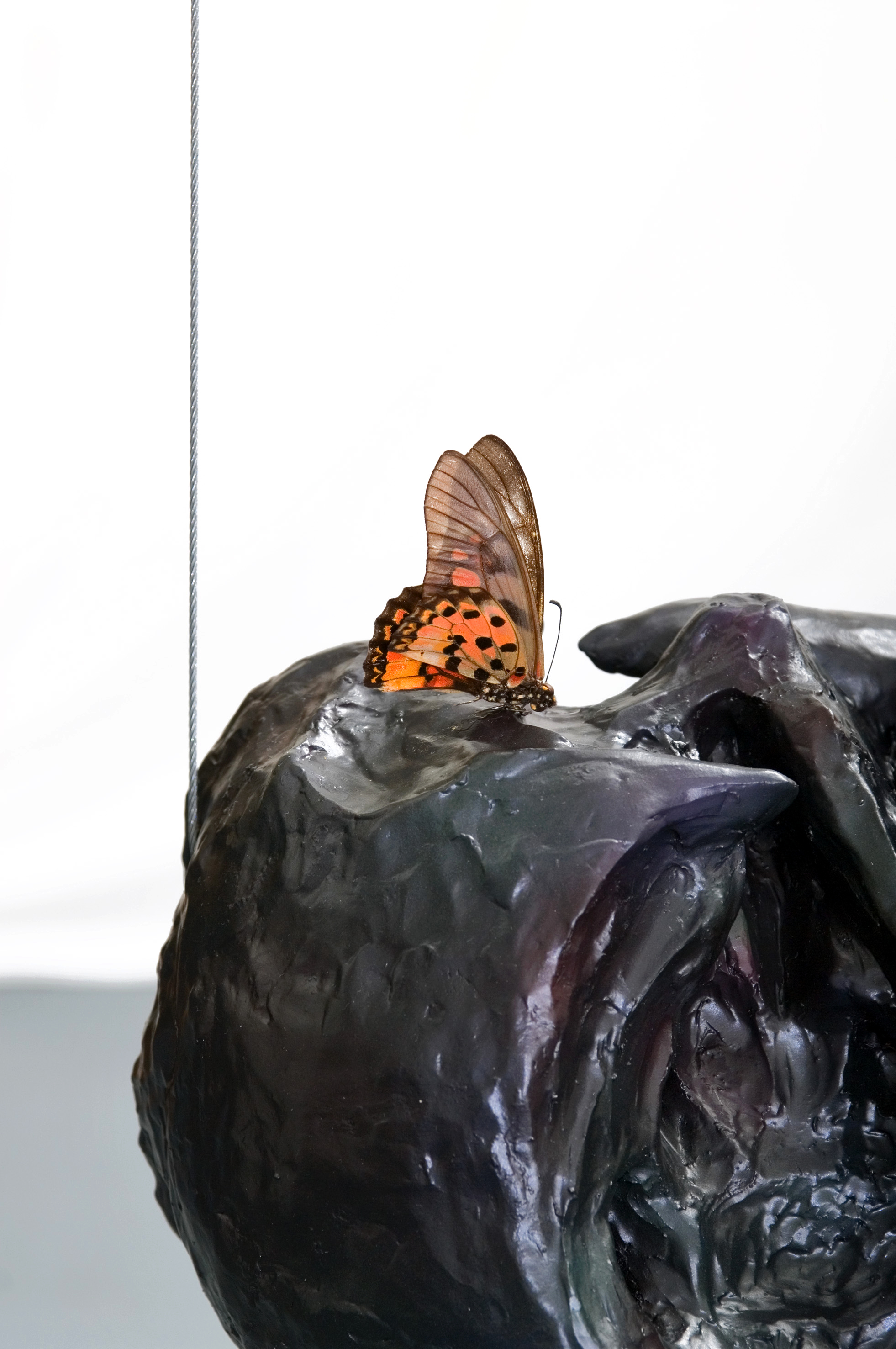
I saw a butterfly on the Tube the other day. To be precise, it was about 10:30 a.m. on a grey Tuesday morning. I stepped onto the Northern Line heading south and looked to my right, towards the loud, expectant low grumble. A young woman walked past, dressed in ‘new beige.’ Her white shoes squeaked assertively.

As she veered to her left, she left in her wake a butterfly. The butterfly was moving, drifting to and fro, fluttering in the air currents that surely had their own language—their own special subterranean paths. As I watched, the butterfly flew perilously close to the tracks; the depth of the trench versus the tiny size of the butterfly gave a strange sense of vertigo.

Is there anyone in this world who does not think about life in this way? Confusing, abandoned, and out of place. From this confusion, this messy collision of feelings and facts, artists find the kernel of every idea. They navigate life’s shifting winds—these pulls and pushes—dragged down by a sense of worried existence, weaving all of it into their work with technical skill—or brute force. From that mess, they create a kind of ladder—a ladder that, in the corner of their eye, they imagine could take them to the moon.

Yet artists somehow know, deep down, that what they are searching for is not simply creation for others but reflection—an understanding of themselves, and that in some way all the navigating, questioning, crafting, and skill is itself some kind of necessary message—a kind of labour that is a reflection of our struggle.

This butterfly, which for all intents and purposes resembles a bait dangling on a fishing line, becomes an easy metaphor for all of us. It’s a gentle, tragic reminder of our fragile lives. Born from a twinkle in nature’s eye, it mirrors our own creative path: a ladder rising from chaos, a struggle between the pull of imagination and the certain weight of death.

At the journey’s end, we dance off into the void, into darkness, yet it is not until we reach that darkness—as the butterfly did, flying down into the tunnel—that its dance (its artwork) becomes truly significant. It was only when its shape and form disappeared into the darkness, when it rejoined the place it came from, that I could reflect on and appreciate the disjointed poetry of this dance—the end object, the memory.

“And I, infinitesimal being, drunk with the great starry void, likeness, image of mystery—I felt myself a pure part of the abyss.”
— Pablo Neruda

Image : Richard Nik Evans, Red (detail), 2006

It always feels like art fairs, such as Frieze, take more than they give. They are maximalist experiences, overloaded with spectacle and noise, whereas studio visits are minimalist, intimate, and often fragile. The irony is that when an art fair comes to town — a little like a circus or sideshow — artists often follow, or are dragged along, and that can lead to studio visits. Yet the intense, feverish energy of the fair, charged with false promises of fame, money, and truth, tends to leak into the studio. The fair frames and fuels the visit, and everything becomes infected with its urgency and superficial glare.

On a recent visit, my guest arrived visibly pumped. After half an hour of art-world gossip, we finally had to confront the elephant in the room — the work itself. It’s always a difficult bridge to build when the visitor makes or exhibits work very different from what they’re looking at. Ideally, both sides start bridge-building and meet in the middle; in reality, one tends to race ahead while the other hesitates, becoming the spectator in the room.

The visitor slumped into the only comfortable chair, ghost-like under its dirty sheet, distracted by last night’s booze and the endless stream of images flickering across his phone. He hadn’t really looked up since his first introductory monologue. You could almost see the party invites and private views reflected in his pupils. Every so often, he’d glance up and say things like, “I love it,” “Keep going,” or “Do more!” These didn’t feel like platitudes exactly, but they didn’t feel like real engagement either. The takeaway seemed to be: “I like where this is going, where you’ve been, but it’s not really my thing.” Later, as I was driving him to the next opening, we stopped at a red light — and he got out at that one.

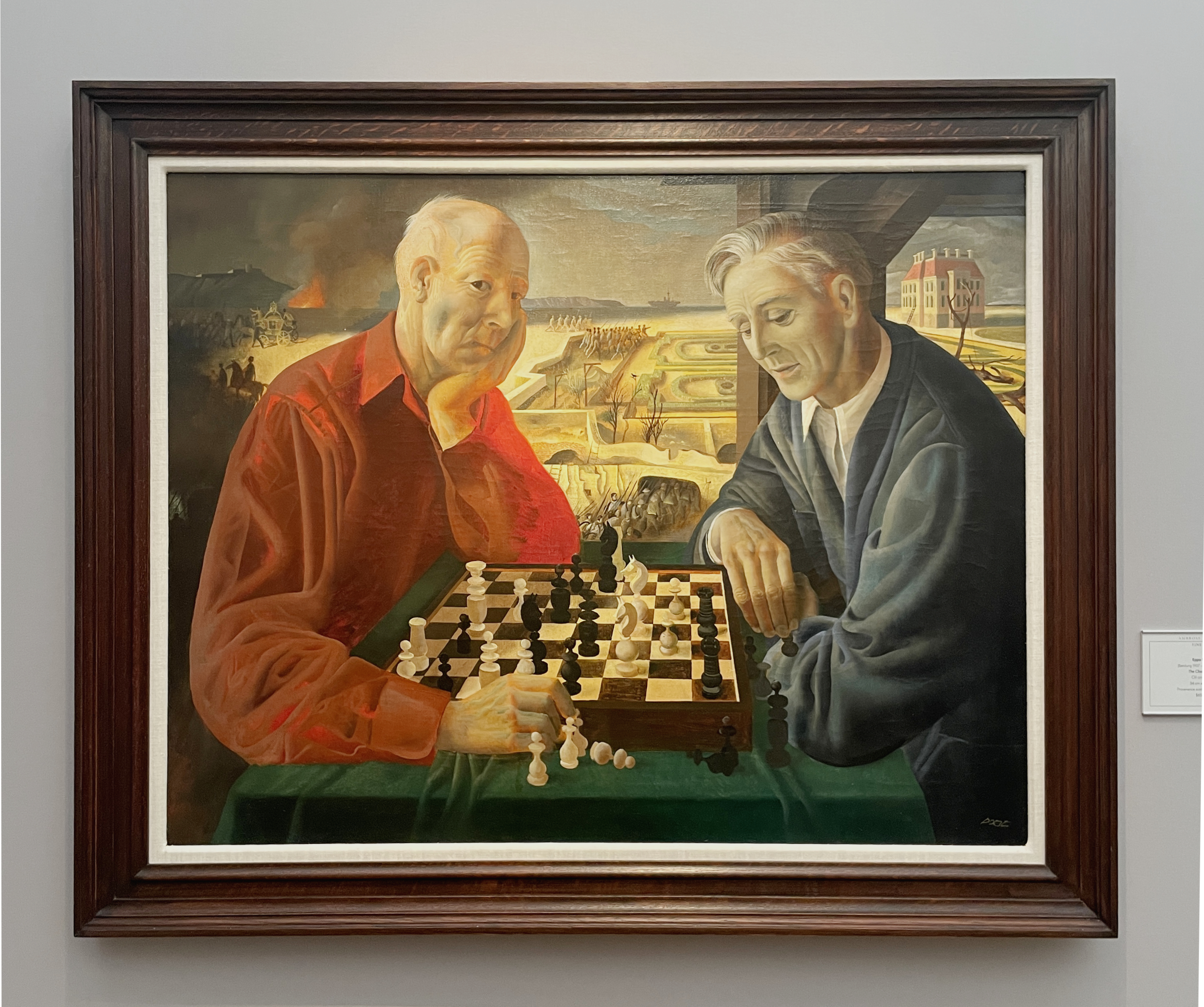
The next day, I was back at Frieze myself. The crowd felt like a sea of Argos level paparazzi — even if only for their own Instagram feeds — each visitor photographing what they agreed with. I thought about the studio visit and realised I was doing the same thing. I was looking for work that fitted my own values and aesthetics. I wanted confirmation — to see my careful mix of concept, art, and psychology reflected back at me. Here I was, pretending to discover new work but actually just wandering through the fair, searching for validation rather than encountering work on its own terms.

Why couldn’t I, as yesterday’s visitor seemed to suggest, judge the work by reading its history — by seeing how it had developed into something original, even if it wasn’t ‘my thing’? Why couldn’t I take pleasure in watching a work form its own language, one I could learn to read because it was teaching me how to see it? Would it be possible, I wondered, to move through an art fair and see each work in the context of its own world rather than my own — to bring curiosity instead of personal, cynical judgement?

Why are we all obsessed with defending our own set of values — insisting there’s only one way art should move forward, only one lens through which it can be understood? It mirrors how we see the world itself: we conform to freedom, but only our version of it. We all know there are hundreds of routes, hundreds of art worlds, yet we still insist on our way or the highway.

Art fairs should be the perfect opportunity to test this openness — a mirror of the art world, a hotbed of discovery and serendipity. But in practice, every element that could support real engagement is lost. The context is commercial, not academic. The atmosphere is like a crowded nightclub with great wallpaper, where you barely know the people you’re shouting at, not the quiet of a gallery where the work can breathe. No artist makes work to be shown at an art fair. The space rarely complements the work. The gallerists, understandably, just want to survive the weekend — financially and mentally.

It’s difficult to stay open when everything around you is closing you down.

And yet, despite all this, perhaps Frieze has given me more than it has taken. Through the fog of hangovers and hurried studio visits, I’ve stumbled upon a quieter, more generous way of looking — one that might just outlast the concept of the art fair itself.

Image : Eppo Doeve, The Chess Players, 1946 at Frieze Masters 2025 

Recently, someone failed to respond to a personal message that I had spent some time writing. I hadn’t spoken to them in a couple of years, but they had been an important part of my life, if only briefly. As time went by I started to get a creeping feeling of uncertainty, of being in limbo, helpless, suspended in anxiety — a feeling we’ve all grown used to, though it has become more prevalent and often tied to anxiety since we started using the internet as a kind of mirror. A mirror that doesn’t answer back, but instead presents us with heightened, often unwanted or unrealistic desires.

This unanswered desire, this creeping uncertainty, is a feeling artists know too well. It is a key essence of art-making: the uncertainty of which direction to go in, of whether what you’re doing has any value, how it will be received, if the work will ever be shown. Artists have to live in a state of constant uncertainty and delayed gratification. If they don’t accept this, they cannot fully engage in their practice. If they resist uncertainty, they often fall back on the rules of design or advertising, making art that fulfills a function rather than exploring unknown possibilities.

I think this feeling has deep roots in Western culture. The madness of endless productivity has trained humans to get used to absence and loss; the machine discards people. Think of how many people simply disappeared in war, or just walked out of a house — never to return. I think of the moment in The Grapes of Wrath, where Tom Joad leaves, simply disappears. In the narrative, it is to join the larger cause, the class struggle. But to me, as a teenager, it was just the raw experience of loss. I just couldn’t get over how you would build up a character like that just to dispose of him, metaphor or not.

In the 21st century, technology allows us to be found and tracked at all times, yet this very ease of connection has paradoxically increased loneliness and uncertainty. The easier it is to reach someone, the less we actually do. Could it be that we miss the real loss of someone — this feeling of disappearance that we have been socialized over the centuries to accept — so much that we’ve had to invent substitutes: ghosting, breadcrumbing, orbiting, submarining, or benching? In simple terms, psychologically weaponizing the act of disappearance.

I think artists who have trained themselves to live in this uncertain state are in a unique position to deal with it. They are disassociated from fixed aims and goals and can see uncertainty as a healthy, mindful state, turning it from fear, shame, or anxiety into a creative state of mind. But to do this, we first have to see it and label it as a natural part of the human condition — day-to-day life. We must be comfortable sitting in the darkness, knowing that no response may be itself a response, but also a mirror back to the original question, and that questions are sometimes worth asking, even without answers.

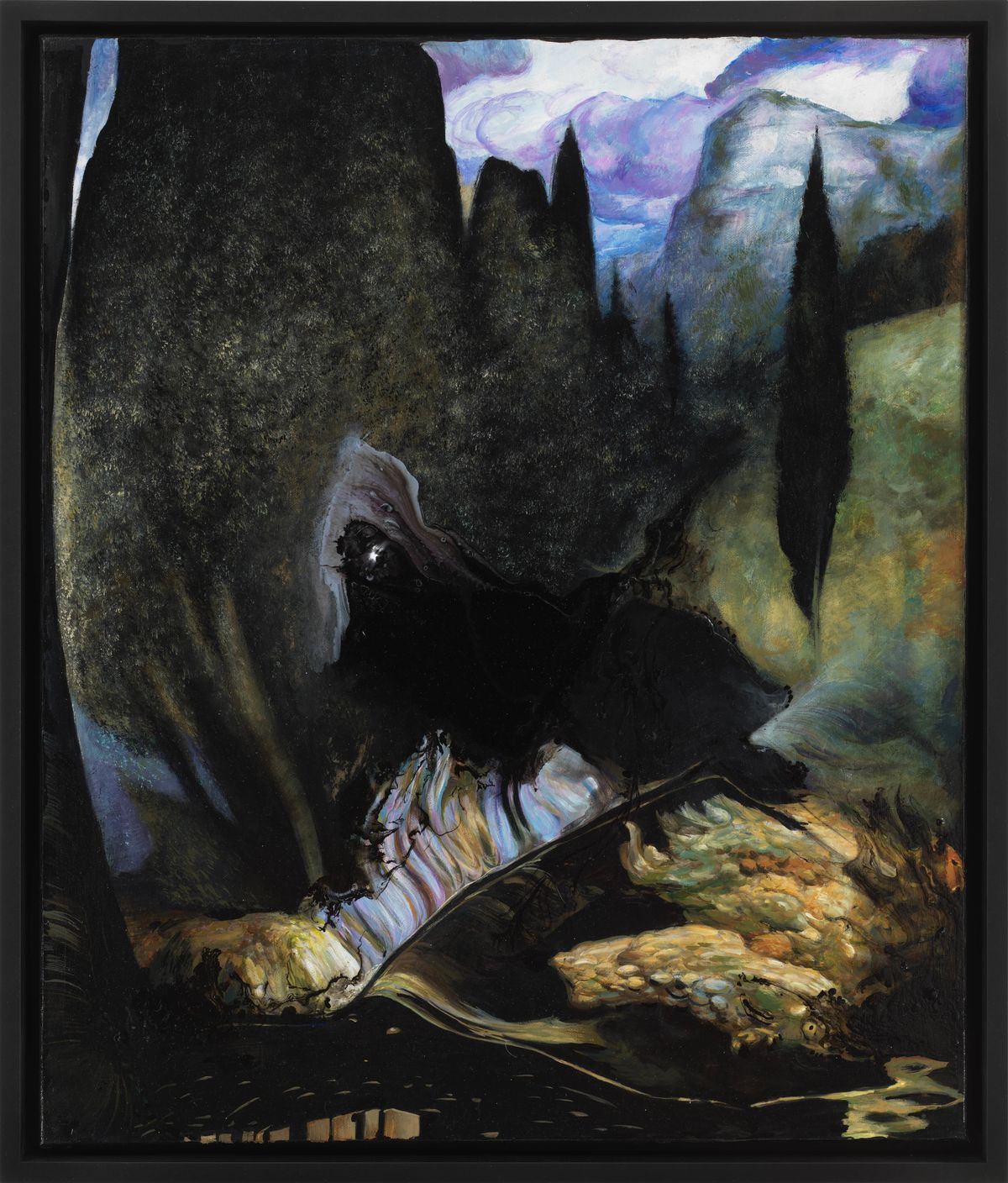
Image : Rachel Rose, Pitch Black Verdigris Green, 2022

veritybirtDAH10_670

.

An A Moment of Eternal Noise radio special on Witches with guests Una Hamilton Helle curator of the touring exhibition Waking the Witch and exhibiting artist Verity Birt. First broadcast in November on Resonance FM.

This one hour show features sound collages, spoken word, soundtracks, new music, field recordings and discussion covering various Witch related issues including how Witches in art and popular culture can reflect social concerns such as gender, labour division, exploitation and resistance.

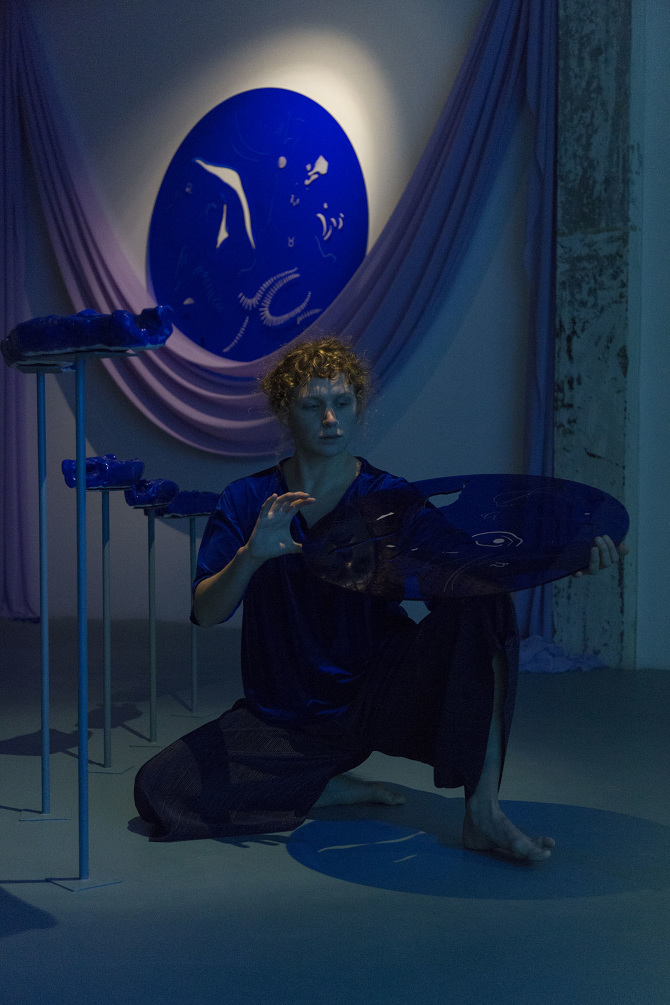
Image – Performance still from Deformation Attends Her by Verity Birt, performed on the Vernal Equinox. Dance by Alys North, readings by Verity Birt and sound by Philip Serfaty. https://www.veritybirt.co.uk/

AMOEN Verhoeven


.
A Moment of Eternal Noise Radio stitches together samples, field recordings, interviews and tracks taken from recent cultural events, new music releases and audio archives.

This (death of) Summer mix jumps from Block Universe Performing Arts Festival with sound artist Hanne Lippard to field recordings at the Baptistery in Pisa via Tom Cruise and finishes with an interview with Julie Verhoeven.

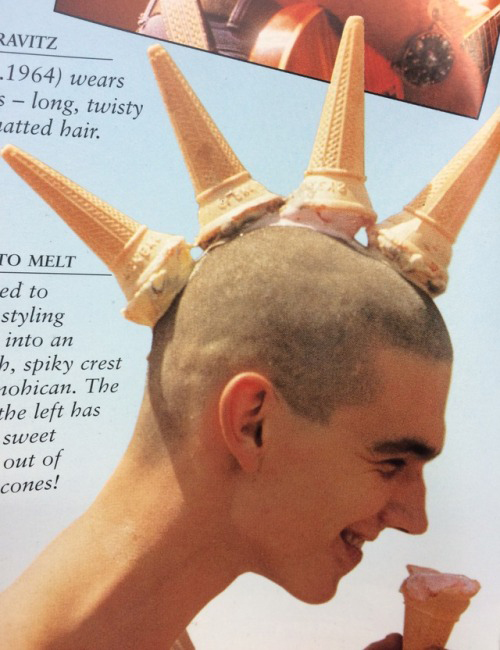
The image is taken from Julie Verhoeven’s collection of vintage ephemeral which can be seen at http://julieverhoeven.tumblr.com/

Tracks excerpts and samples include…

Stein Um Stein, Vierzehn
Dab, John Oswald
Analogue Mountains, Lucrecia Dalt
The Girl I Haven’t Met, Kudasai
Gothic Submarine, Delia Derbyshire
Move Brilliancy, Bobby Fisher’s 21 moves
Reflection, Hanne Lippard
Dark/Light 1, Meredith Monk
These Boots Are Made for Walking, Crispin Glover
Smooth Operator, Sade
Winer Morning II (with Robert De Niro), Woodkid & Nils Frahm

Chris Dorland interviewed in his New Jersey studio in May 2018. The interview covers his art practice, influences, struggles, materials, his role as director and founder of Magenta Plains gallery, NYC and his recent show at Aetopoulos Gallery.

Chris Dorland http://chris-dorland.com/

Aetopoulos Gallery http://www.aetopoulos.info/

Magenta Plains http://magentaplains.com/

IMG_6952editforAMomentWebsite


.
A Moment of Eternal Noise Radio weaves together samples, field recordings, interviews and tracks taken from recent cultural events, new music releases and audio archives.

This months highlights include Ligeti’s Metronome performance at the British library, Brian Eno on why not too get a job, Sigur Ros’s new project Route One, Ruben Östlund’s film The Square, Bill Murray, Jonathan Wilson and classic Nino Rota. Photo features Bill Murray and Karlheinz Stockhausen.

This months mix also includes a new feature The Random Track of Kindness. Here we play a random(ish) track dedicated to a person who performed a random altruistic act – such as buying a random stranger coffee. Did you witness such an act today? If so please email the radio station so I can feature it on future shows.

Tracks, excerpts and samples include…

Stockhausen on human evolution
Struktur II, Karlheinz Stockhausen
Tired of Getting Pushed around, 2 Men and A Drum
The Square, Film Trailer
How to act like an ape, Terry Notary
The Radom Track of Kindness – I think were alone now, The Rubinoos
Piano Solo from the movie Plein Soleil (Purple Noon), Nino Rota
Poème symphonique, György Ligeti
Genetically (Central Processing Unit), Nadia Struiwigh
Mod 9EX, Andreas Gursky and Ritchie Hawtin
Don’t get a job, Brian Eno
Sigur Rós – Route One
Talk excerpt, Richard Evans and Brian Dawn Chalkey
Memories of You, Benny Goodman
Over the Midnight, Jonathan Wilson

002TheShipweb 

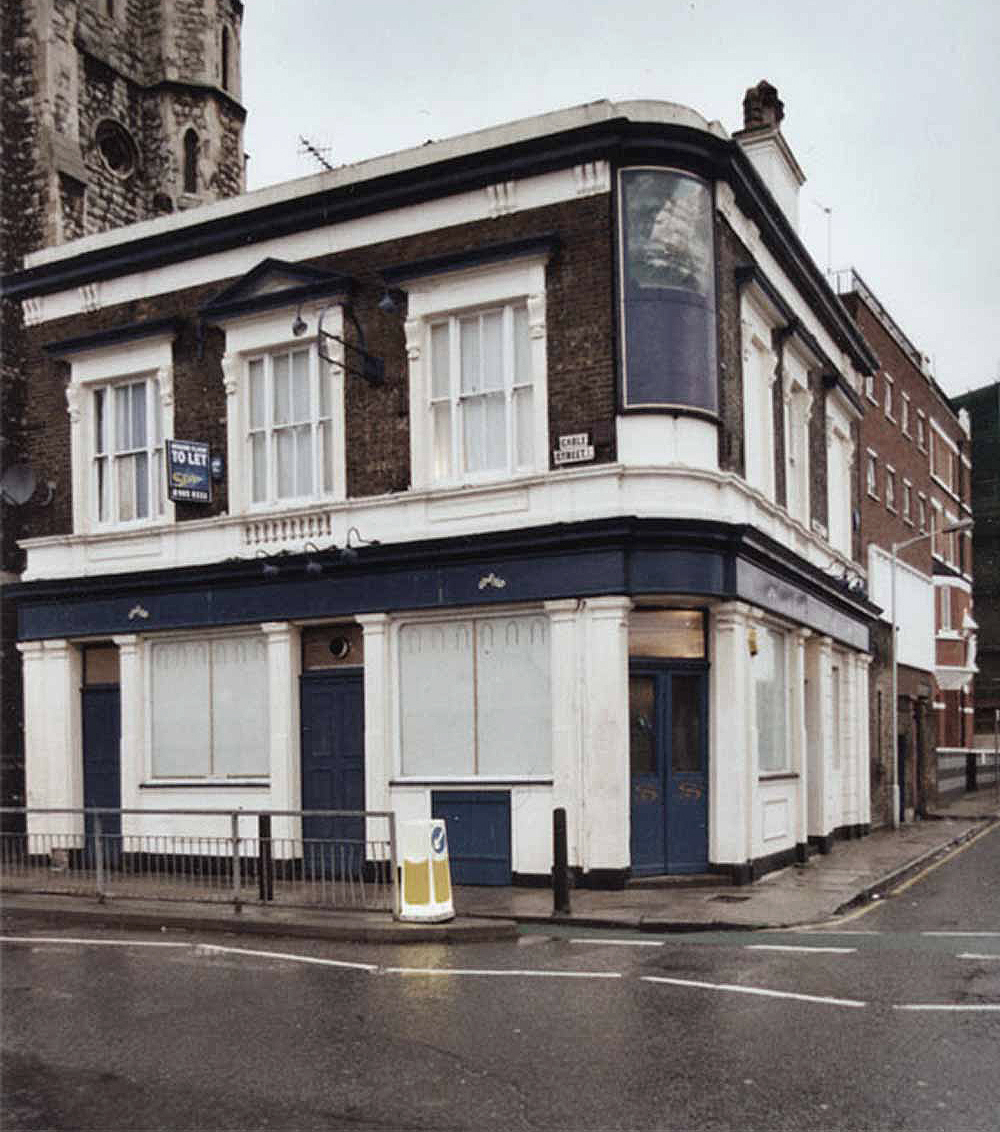
After talking to Brian Dawn Chalkley about contributing to a show for our project space FLAT:TWO he invited himself around my studio and bought the entire Chelsea M.A. with him. We recorded the interview and here it is in it’s entirety discussing the struggles and successes of making work. Covering all the important chapters of my career from studying at Chelsea to showing in commercial galleries, moving to New York and running project spaces. Image is The Ship project space on Cable street in 2002.

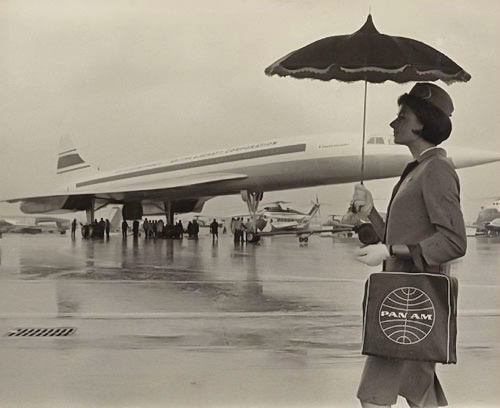
concorde in the rain AMOEN March 2018
.

.
A Moment of Eternal Noise is a show on London Fields Radio that weaves together recent cultural discoveries by Richard Evans in a seamless aural collage.

On this show which is pre-recorded in the gallery FLAT:TWO we take a look at Concorde, suffragettes, lighthouses and a shipping forecast that involves Ginger Rogers and Fred Astaire.

Tracks, excerpts and samples include…

Concorde takes off
The Combine, John Maus
New York to London, inflight recording
Spitfire, Public Service Broadcasting
From the Air, Laurie Anderson
More Women, Saada Boonaire
Tokka, Agnes Obel
The Suffragettes, Pathe News
Memorial, Michael Nyman
Freedom or Death, Emmeline Pankhurst read by Emily Blunt
Get Thy Bearings, Bonobo
Swallowtail lighthouse bell
Rethikhly, Ricardo Villalobos & Max Loderbauer
Rain, Poppy Ackroyd
The life of a lighthouse keeper
Balladyna, Tomasz Stanko
Camera Obscura (1976 revision), François Bayle
The Shipping Forecast, Les Barker, read by Brian Perkins
Unfamiliar Wind (Leeks Hills), Brian Eno

If you are reading this as an email subscriber you can listen to the show either on the official London Fields Radio website….
.
http://www.londonfieldsradio.org/mix/a-moment-of-eternal-noise-march-2018/
.
Or on the A Moment of Eternal Noise Website…
.
https://amomentofeternalnoise.com/


Processed with VSCO with b3 preset


.
Richard Evans presents the first A Moment of Eternal Noise Radio show on London Fields Radio live from Wilton Way Cafe with special guest Rut Blees Luxemburg who discusses her recent show at Dominique Fiat Gallery in Paris. The show continues the website’s interest in connections between place, sound, music, film, art and narrative with interviews, spoken word, field recordings, sound and music. This months show takes a look at Alfred Hitchcock, early synthesizer the Trautonium, ornithology, author Amy Liptrot, T.S. Elliot, Nils Frahm and fan made Bladerunner soundtracks.

Tracks and excerpts include,

Le pas du Chat Noir, Anouar Brahem
When, Vincent Gallo
Diane, The Bachelors
The Days of Pearly Spencer, David McWilliams
Paper Trails, Darkside
Bird of Space, Bonnie Dobson
High Flying Bird, Judy Henske
The More I See You, Chris Montez
JF Sebastian, Vangelis (Bladerunner, Esper Version)
The Prodigal Son Brings Death, Vangelis (Bladerunner, Esper Version)
The Duke Arrives, John Carpenter
Have a Cigar, Gabriel Yared
Familiar, Nils Frahm
T.S.Eliot, The Lovesong of J. Alfred Prufrock
Poor Lazrus, Dave Van Ronk

IMG_2276WEB


.
This sound work is a first person narrative about a supernatural figure that appears on a ferry in the Greek islands and inhabits the bodies of sleeping tourists. By dissolving into a cloud of fog which envelopes the boat the protagonist possesses their bodies and travels back in time. The work combines traditional horror tropes and art historical references with a satirical tale of hyper-consumerism.

The work which was written and read by Richard Evans was made by recording cellist David Barbenel improvising to the story being played through headphones. The improvisations were cut into parts, looped and set against a soundscape of samples and field recordings. The work was shown at Aetopolous Gallery, Athens.

This is the full transcript of a talk I did on Tuesday 21st June 2016 at ODD curated by Rachael Lawe. The talk is an extended narrative from a page in my diary where I relate several encounters with art, film and music to ideas about surface, horror and New York.

“This talk is a talk about a day. A day when I thought a lot about surface.

The 14th June 2016.

The idea came from meeting Catherine, who did the jeans talk last month in The Strand book store, in the fashion section where I had got stuck browsing one of the Satorialist fashion photography books.

‘Street style’ is of course the public face of New York, the make up on the culture here. Its pretty skin hides the dirt and mess that is the bones and sinew of New York’s infrastructure and social welfare problems.

If it can, contemporary fashion photographs use the dirt and trash as backdrops, throwing the well-dressed model into stark relief.

The subway station looking as though it hasn’t been cleaned since it featured in the movie The Warriors (Nostrand Avenue), the now demolished White Castle on Metropolitan Avenue or the dive bar that draws no patrons but is endless used as a film and fashion location (Vazac’s Horeshoe Bar on Tompkins Square park; The Godfather, Crocodille Dundee, Law and Order, Jessica Jones, Chanel, Vogue, Prada).

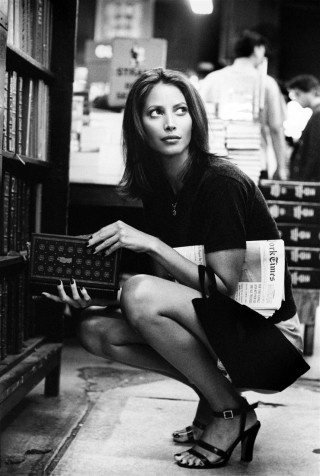
1-christie-turlington-in-the-strand

And finally of course The Strand bookstore, here’s Christie Turlington browsing the very shelf where I talked to Catherine and suggested to that I’d do a talk about 14th June. Starting as I have with New York’s favorite surface. The thin layer of textile and fiber that we feebly hope will identify us as worthy, and the rest of the world as lacking.

I got up at 8 and got dressed. Sluggish on this gray New York morning I made my way to work. That day it happened to be at a design gallery in Chelsea.

Getting off at 23rd Street station with every other art worker I followed the crowd to Joe’s coffee and eventually the gallery.

While walking I thought about the history of Chelsea, the warehouses, the decaying wooden posts once supporting a dock or jetty, the lost dance clubs of the 80s and the endless restaurants opening and closing, themselves resembling vehicles coming and going. Like fashionable Red Cross vans, arriving, opening their doors, distributing food, and leaving the conflict as it was when they arrived.

Chelsea like the whole of New York is just a string of facades, here today and gone tomorrow, constantly renovated and rented; their histories remade/remodelled.

There is always some entertainment in walking past businesses that are fakes, imitating other histories.

A fake library, a fake French bakery, a fake English tea room. New York is its own special theme park. Once a real cosmopolitan melting pot it’s now a huge stage set with the squeaking boards replaced every week.

Another business pushed through the unforgiving revolving door.

Then work starts and I spend the day filling holes, white washing walls and generally making the space look as if nothing had ever been there. Art handlers are a bit like Harvey Keitel’s The Wolf in Pulp Fiction. Professional erasers, but less formally dressed and hopefully with cleaner consciences.

New York is the epitome of denial through surface. Even though we know there is always something monstrous lurking behind the glamour, we enjoy the glamour. One of New York’s best assets is to show a constantly brave face through adversity, even if it creates that adversity itself.

After a morning going slowly snowblind from staring at the expanses of white emulation I was asked to hang this painting.

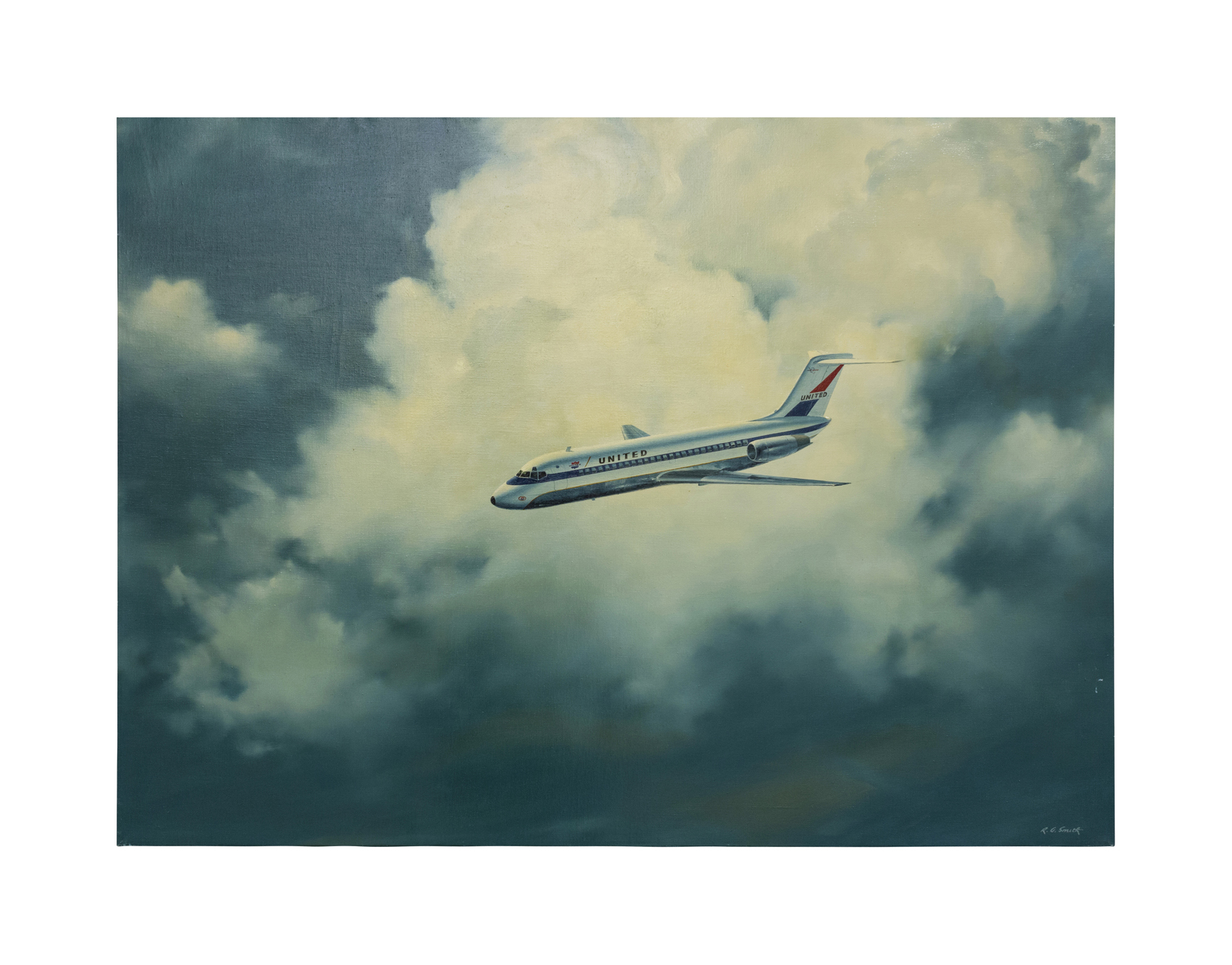
2-robert-grant-smith-mcdonnell-douglas-aircraft-oil-painting

It’s by Robert Grant Smith McDonnell and is of a Douglas Passanger Aircraft painted in 1954.

I have always liked these 1950s advertising paintings, a natural precursor to photorealism and I have always especially enjoyed their uncanny failure.

Their failure to really capture the glamour and excitement of air travel.

Paint will always look like paint and this surface instead of transporting you into a luxurious fantasy is just a badge of corporate identity trying to hide one of the worlds most environmentally damaging industries.

The plane looks distant, hovering, not inviting. The clouds in the painting roll around the edge of the stretcher as if trying to hide the fact it’s a painting but the perfect brush strokes are never perfect enough. The plane sits here, frozen forever. Loosely constructed from pigment suspended in dried oils.

The point of view of the viewer and painter is suspended in space. An impossible corporate fantasy created with a bizarrely thin surface. Both the corporation and the art lack depth.

After the day finished I went to the Strand where I met Catherine and had the brief conversation.

Leaving the fashion section I retired into the photography ‘nook.’

No celebrity models were to be found.

I was avoiding going home and hoping for some inspiration. I have always preferred libraries and markets to Google.

Serendipity never feels random on the internet.

After a few minutes I came across a book of Hans Namuth’s photographs of artists form the 60s, most of which were very familiar but this one stood out.

3-hans-namuth-rothko-1965small

A photograph I hadn’t seen of Rothko. Here he was looking as melancholic as you’d expect in 1965. 5 years before he committed suicide in 1970.

Looking at the picture I wondered what he was thinking about, what was happening in his life.

What was going on under the surface.

After looking at the frozen moment I realized I was looking at the master of hidden anxieties and monochromatic masks. The man who actually said he wanted people to cry in front of his work reduced his work to a surface and here I was staring at him reduced to another surface in a building full of thousands of paper surfaces.

He removed everything in the world except what was for him a signifier of emotion. Made the world as simple as possible.

Why I started to think is ‘nothing’ so upsetting, why is surface so associated with pain; nihilism, emptyness, space. Rothko was surely trying to counteract this idea, not add to it.

Why if we know or always suspect that fake surfaces must cover up something that can harm us do we continue to worship them?

I hurried home to avoid this thought, any other ideas lost in the hum and flow of a busy L train subway car at 7pm on a Tuesday evening.

Back at home over my Graham Ave Hi-Noodle tofu take out I settled in front of Hulu.

I have a short cut on my browser to the Criterion collection but sometimes it’s just too much effort. Today a documentary would suffice. The first thing to pop up was The Falling Man.

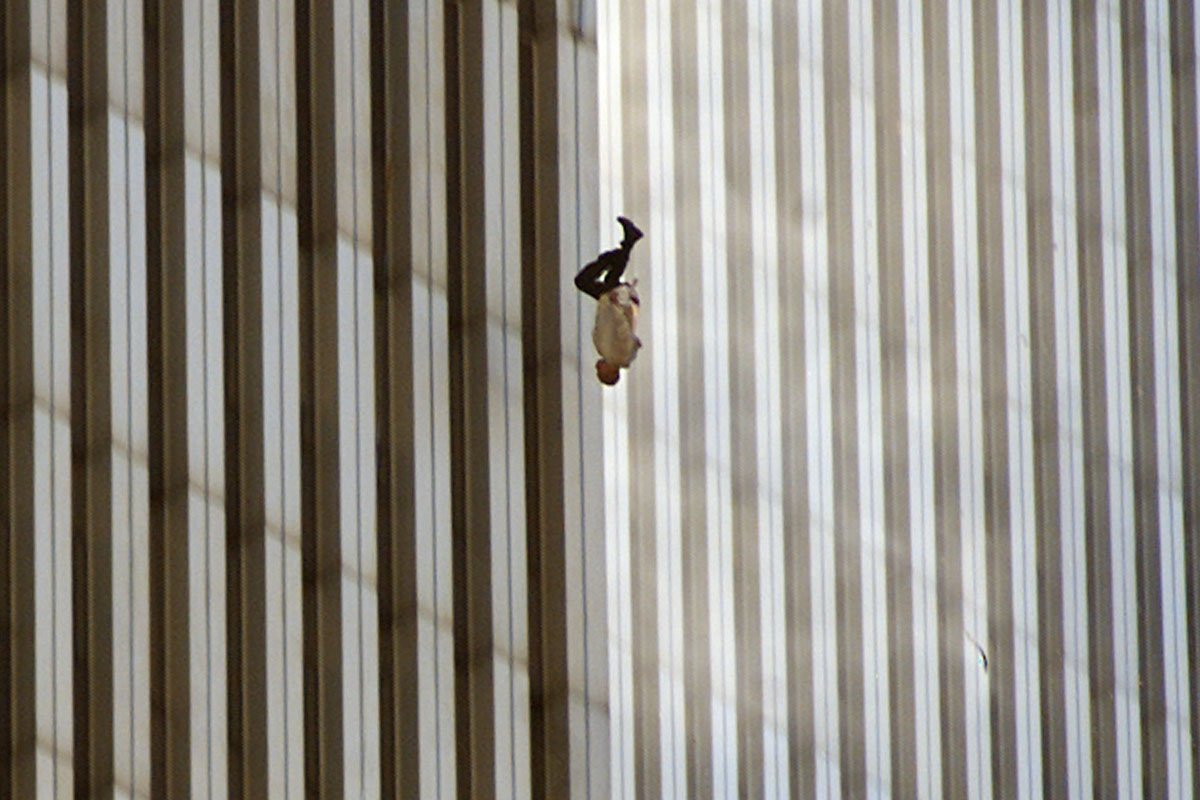
4-the-falling-man

A documentary dedicated to finding out the identity of the falling man in Richard Drews’ iconic photograph, and not really worrying about who it offends along the way.

This is one of those internet moments when you know you just shouldn’t click on it, that the next hour will be swallowed and the experience gained will leave you feeling somehow worse than when you started.

The documentary isn’t particularly insightful but just repeating the image with different stories is so captivating it keeps you watching. It’s difficult not to get affected by the people so I won’t describe the stories but the one thing that struck me is how simple it is.

It eloquently describes hell on the inside of the building and heaven on the outside by contrasting a figure against a surface.

The corporate structure inside and nature and air on the outside. The smoke and fire on the inside and light breeze and sunshine on the outside. And it forces your imagination to do most of the work, not just about the man but about, yourself, politics, humanity and everything in-between.

And the thing that stood between this heaven and hell, the thing that gave birth to such ideas was this thin wall.

That wall is something to think about.

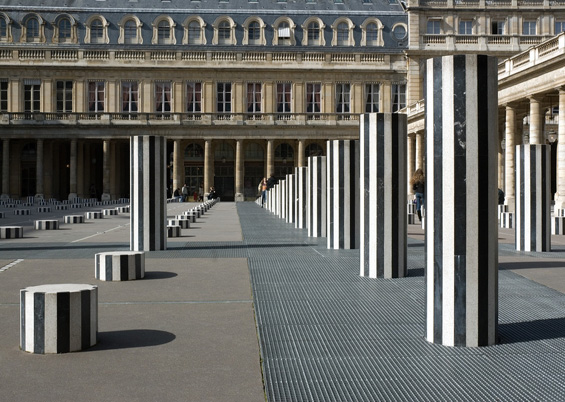
Being a selfish artist I immediately start thinking of Daniel Burren’s formal interventions. Here is his 1986 ‘controversial’ work Les Deux Plateaux installed in The Palais Royal.

5-les-deux-plateaux-1986-daniel-burren-palais-royal-large

The formal similarities are obvious and the subject matter the opposite, one interventionalist formalism the other an image that seems to describe our deepest thoughts about the human condition. What, I think is behind Buren’s work, is it really as superficial as it seems?

I retired to bed. I like to search obscure radio stations on my tunin app, the further away the better. Some aural astral projection before sleep is always healthy.

Unfortunately there is only one station in Antactica (ANet radio, very calming).

I found one in the mid west playing MOR rock. Bruce Springsteen came on with I’m on Fire.

I’m fairly new to The Boss. In the UK most people generally think he’s some macho republican but of course he’s the opposite, a hero of the working man.

His songs can come across as total surface, rock and roll, booze, youth and love. But under that is a collage of narrative and metaphor about America, its people and places; Insights into the darker side of Vietnam and dance songs that appear to be about love but end up being about elections.

Lets ignore the obvious crass apocalyptic connections between the falling man, the plane, decaying New York, Rothko’s red surfaces and the title I’m on Fire and listen to the song.

The song is superficially about desire and loss, about a girl a boy so desperately wants to sleep with…. He lies in bed tormented by this desire… but after some research the song of course goes deeper.

In the 80s each time he would play the song he would add or take away parts. Often he would include a whole narrative. Instead of just being about lust he described the track in Rolling Stone magazine as being about the frustrating desire for objects, wealth and careers.

It’s a track about what’s under the surface of the American Dream and how the desire for these objects can ultimately lead to violence. Illustrated in the song as a 6 inch knife.

I think it’s interesting to think of the father in the story not just as a family figure but also as Springsteen suggests, as a symbol of America.

A character that can’t control it’s people, a character that can’t get what it really wants and ultimately encourages it’s children to turn to violence to make up for it’s own misfortunes.

This performance is from Paris in 1985.”


The video A World of Its Own was filmed in 2014 and features artist Elif Boyner on a road trip from the Andrew Wyeth painting Christina’s World in the Museum of Modern Art New York to the house in the painting, The Olsen House in Cushing, Maine.

via-appia-1905

EXT. HOLLOWAY PRISON – DAY

Establishing shot.

INT. PSYCHIATRIST’S OFFICE

This is a utilitarian room, obviously part of an institution. Two small pictures are hung on a gray stone brick wall. A chesterfield sofa and chair sit in the middle of the room. Soft light illuminates the scene from one standing lamp. There is one window with diamond shaped bars visible. Both characters are familiar with each other but not friendly, Chris sits on the sofa slouching, Dr. Adams sits on the chair.

CHRIS

It was a long slow trip, the night before last.

DR.ADAMS

Studies have shown sleeping with recorded, organized sound can effect not just the quality of your sleep but also…

CHRIS

My dreams?

DR.ADAMS

Yes, but also your daily behavior.

CHRIS

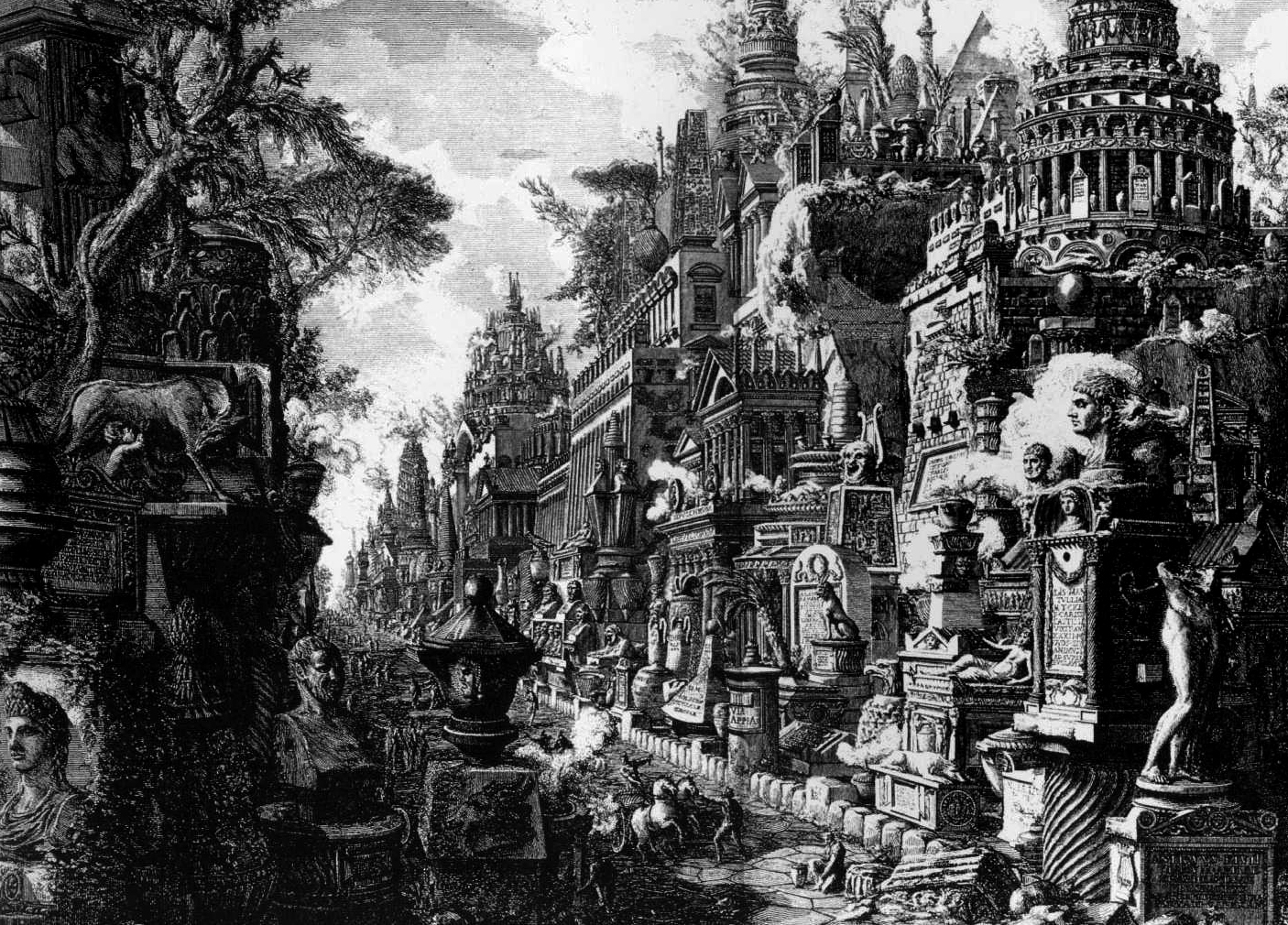
“Ah, ha, but this is not a dream, as I explained before I transported myself into what appeared to be a Piranesi drawing using my fiction/reality machine.

DR.ADAMS

Ah ha, sooo. Sound can affect your dream life. A study by a large foreign language teaching company found that when their subjects fell asleep with their headphones on the next day they would start throwing foreign words into regular conversation. Haven’t you noticed how you no longer see these language courses being advertised?

CHRIS

I haven’t noticed because I’ve been locked in here for the last seven years but I hazard a guess that someone sued for dream damage?

DR.ADAMS

Yes. Well something like that.

CHRIS

I’ll remember that when I brush up on my Franglais before a tour of Burgundy and the great wine regions of Eastern France. But as I said this was not a dream, I went on a trip through a portal created by the fiction transducer machine into a Piranesi etching that I fed into it.

DR.ADAMS

Right, the 19th century engraver and fantasy architect of prisons?

Dr. Adams quietly releases a chuckle.

CHRIS

Yes but the world I entered expanded far beyond the confines of the etching which I think was of Via Appia in Rome. The road famous for many things including crucifying 6,000 slaves after Spartacus’s uprising. About the same amount of prisoners kept in British prisons with indeterminate sentences. Just incase you were wondering.

DR.ADAMS

That is fascinating, you’ve obviously been using the internet again….

CHRIS

No. The library. Anyway after the transportation I was dropped into the middle of this etching. All around me were huge empty plinths; family crypts bearing ornate texts in different languages, tombstones, and models of buildings. Under the buildings were catacombs. I don’t know how I knew this, but I did.

Chris pauses as if struggling to remember something important.

Of course Piranesi’s visions were classical fantasies based on real places in Rome but he wanted them to be built. They never were so I was also wondering if it could have been some kind of time travel. Maybe in the future the earth will be destroyed by an alien spaceship then rebuilt but the only book the construction company had was of Piranesi’s etchings. What do you think?”

DR.ADAMS

I think I get the jist.

Dr. Adams scribbles something in his Moleskine.

CHRIS

Then I looked down, the edge of my boot caressed a black puddle corralled in by a circle of broken cobble stones. I’m wearing brown high-healed boots and a tweed hunting dress. I don’t know how I know but its 1913 and I’m in a horrific E.M.Forster Novel. Where Angels Fear to Tread maybe.

DR.ADAMS

Dr. Adams is still playing with his notebook.

Is that something your read recently?

CHRIS

No, I’ve only seen the film a long time ago, as a student I think.

DR.ADAMS

So then what happened? This is most interesting.

Dr. Adams keeps staring at his notebooks he is now drawing ever-decreasing circles.

CHRIS

Then a girl ran up who I immediately assumed was Lilia Herriton, a young English widow who had died in giving birth to a son. She seems to have mistaken me for her sister. The strangest thing happens instead of her speaking words there’s just a rustling. Her mouth is moving but the sound is not emanating from her body. It is a noise on the edge of noise, as if a human voice was played through a ‘wind synthesizer’ as if the sound of wind had been compressed, all the top and bottom frequencies removed. I paused and stared at her.

Her communication was reduced to a slow opening and closing of her mouth. Obviously what she was trying to articulate was of some importance. Then I noticed the noise was coming from the cracks, the spaces between the stones, between the buildings… The space in between things.

Whatever moral dilemma we were going through, whatever eccentric discussion this omni-present E.M.Forster was trying to convey it was being articulated as a hum. It was a sound that described all the space in between the gravestones, the gargoyles and the cracked slabs. A sound not from the heavens but of the empty space here on Earth or at least on Piranesi’s stroke E.M. Forster’s Earth. I thought that maybe this is punishment for either watching bad movies or for spending too much time looking at Piranesi etchings.

The picture had somehow risen up – in revolt.

DR.ADAMS

Ahha, so how long did this err, scene continue for?

CHRIS

It hasn’t finished, it got very noisy so I decided to take a break.

DR.ADAMS

Ok and you you’ll return to it when you reactivate the fiction/reality machine thing.

CHRIS

Yes, the fiction transposer, translating fiction or making fiction real, maybe it should be called a reality ficionator, well anyway I’m going to revisit tomorrow. Although I have a few other new slides I’d like to scan into it. Slides of a holiday in Estonia, photographed by some German tourists was sent to me by my brother. Maybe you should come along?

Dr. Adams continues drawing the circles in his notebook, somewhat oblivious to the question.

Text: Via Appia by Richard Evans.

Image : Giovanni Battista Piranesi, Via Appia and Via Ardeatina, from Le Antichita Romane, 1756