The video A World of Its Own was filmed in 2014 and features artist Elif Boyner on a road trip from the Andrew Wyeth painting Christina’s World in the Museum of Modern Art New York to the house in the painting, The Olsen House in Cushing, Maine.

EXT. HOLLOWAY PRISON – DAY
Establishing shot.
INT. PSYCHIATRIST’S OFFICE
This is a utilitarian room, obviously part of an institution. Two small pictures are hung on a gray stone brick wall. A chesterfield sofa and chair sit in the middle of the room. Soft light illuminates the scene from one standing lamp. There is one window with diamond shaped bars visible. Both characters are familiar with each other but not friendly, Chris sits on the sofa slouching, Dr. Adams sits on the chair.
CHRIS
It was a long slow trip, the night before last.
DR.ADAMS
Studies have shown sleeping with recorded, organized sound can effect not just the quality of your sleep but also…
CHRIS
My dreams?
DR.ADAMS
Yes, but also your daily behavior.
CHRIS
“Ah, ha, but this is not a dream, as I explained before I transported myself into what appeared to be a Piranesi drawing using my fiction/reality machine.
DR.ADAMS
Ah ha, sooo. Sound can affect your dream life. A study by a large foreign language teaching company found that when their subjects fell asleep with their headphones on the next day they would start throwing foreign words into regular conversation. Haven’t you noticed how you no longer see these language courses being advertised?
CHRIS
I haven’t noticed because I’ve been locked in here for the last seven years but I hazard a guess that someone sued for dream damage?
DR.ADAMS
Yes. Well something like that.
CHRIS
I’ll remember that when I brush up on my Franglais before a tour of Burgundy and the great wine regions of Eastern France. But as I said this was not a dream, I went on a trip through a portal created by the fiction transducer machine into a Piranesi etching that I fed into it.
DR.ADAMS
Right, the 19th century engraver and fantasy architect of prisons?
Dr. Adams quietly releases a chuckle.
CHRIS
Yes but the world I entered expanded far beyond the confines of the etching which I think was of Via Appia in Rome. The road famous for many things including crucifying 6,000 slaves after Spartacus’s uprising. About the same amount of prisoners kept in British prisons with indeterminate sentences. Just incase you were wondering.
DR.ADAMS
That is fascinating, you’ve obviously been using the internet again….
CHRIS
No. The library. Anyway after the transportation I was dropped into the middle of this etching. All around me were huge empty plinths; family crypts bearing ornate texts in different languages, tombstones, and models of buildings. Under the buildings were catacombs. I don’t know how I knew this, but I did.
Chris pauses as if struggling to remember something important.
Of course Piranesi’s visions were classical fantasies based on real places in Rome but he wanted them to be built. They never were so I was also wondering if it could have been some kind of time travel. Maybe in the future the earth will be destroyed by an alien spaceship then rebuilt but the only book the construction company had was of Piranesi’s etchings. What do you think?”
DR.ADAMS
I think I get the jist.
Dr. Adams scribbles something in his Moleskine.
CHRIS
Then I looked down, the edge of my boot caressed a black puddle corralled in by a circle of broken cobble stones. I’m wearing brown high-healed boots and a tweed hunting dress. I don’t know how I know but its 1913 and I’m in a horrific E.M.Forster Novel. Where Angels Fear to Tread maybe.
DR.ADAMS
Dr. Adams is still playing with his notebook.
Is that something your read recently?
CHRIS
No, I’ve only seen the film a long time ago, as a student I think.
DR.ADAMS
So then what happened? This is most interesting.
Dr. Adams keeps staring at his notebooks he is now drawing ever-decreasing circles.
CHRIS
Then a girl ran up who I immediately assumed was Lilia Herriton, a young English widow who had died in giving birth to a son. She seems to have mistaken me for her sister. The strangest thing happens instead of her speaking words there’s just a rustling. Her mouth is moving but the sound is not emanating from her body. It is a noise on the edge of noise, as if a human voice was played through a ‘wind synthesizer’ as if the sound of wind had been compressed, all the top and bottom frequencies removed. I paused and stared at her.
Her communication was reduced to a slow opening and closing of her mouth. Obviously what she was trying to articulate was of some importance. Then I noticed the noise was coming from the cracks, the spaces between the stones, between the buildings… The space in between things.
Whatever moral dilemma we were going through, whatever eccentric discussion this omni-present E.M.Forster was trying to convey it was being articulated as a hum. It was a sound that described all the space in between the gravestones, the gargoyles and the cracked slabs. A sound not from the heavens but of the empty space here on Earth or at least on Piranesi’s stroke E.M. Forster’s Earth. I thought that maybe this is punishment for either watching bad movies or for spending too much time looking at Piranesi etchings.
The picture had somehow risen up – in revolt.
DR.ADAMS
Ahha, so how long did this err, scene continue for?
CHRIS
It hasn’t finished, it got very noisy so I decided to take a break.
DR.ADAMS
Ok and you you’ll return to it when you reactivate the fiction/reality machine thing.
CHRIS
Yes, the fiction transposer, translating fiction or making fiction real, maybe it should be called a reality ficionator, well anyway I’m going to revisit tomorrow. Although I have a few other new slides I’d like to scan into it. Slides of a holiday in Estonia, photographed by some German tourists was sent to me by my brother. Maybe you should come along?
Dr. Adams continues drawing the circles in his notebook, somewhat oblivious to the question.
Text: Via Appia by Richard Evans.
Image : Giovanni Battista Piranesi, Via Appia and Via Ardeatina, from Le Antichita Romane, 1756
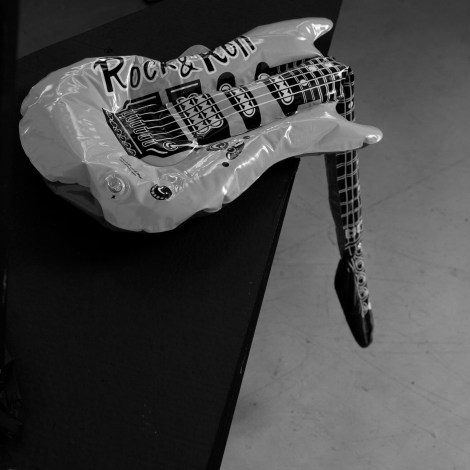
Prelude – Ingram Marshall
Hand Vs Hand – sample from Night of the Hunter
Dripsody – Hugh Le Cain
Tea for two – Helen Clark and Lewis James
Shame On Me – Zu + Eugene S.Robinson
Intro & Burnt (Live in the Still of the Night) – Whitesnake
Moonchild – Vincent Gallo/King Crimson
Sweetness – Yes
Leftover Wine – Melanie
Œillet Parfait – Œillet Sauvage – Marsen Jules Trio
Inside – Ingram Marshall
Please Send Me Somone to Love – Fred Neil
Postlude (The Bay) – Ingram Marshall
If You Were My Man (Studio) – Linda Perhacs
Golden Girls – Devendra Banhart
Construction – Nicholas Jaar
End Credits – No Country for Old Men
Slingblad Monologue – Billy Bob Thornton
Born Under The Wrong Sign – Nazareth
Walking in The Air – Aled Jones
Folie A Deux – Nicholas Jaar
Buffalo 66 Photo Booth scene – Vincent Gallo
Daemon Lover – Shocking Blue
The End – Sibylle Baier
Rosemary’s Baby theme – Krzysztof Komeda

.
We got married at the City Hall, and then we went to the beach. She looked so pretty I just wanted to play in the sand with her, but she had this little smile on her face, and after a while she got up and went down to the surf.
“I’m going out.”
She went ahead, and I swam after her. She kept on going, and went a lot further out than she had before. Then she stopped, and I caught up with her. She swung up beside me, and took hold of my hand, and we looked at each other. She knew, then, that the devil was gone, that I loved her.
“Did I ever tell you why I like my feet to the swells?”
“It’s so they’ll lift them.”
A big one raised us up, and she put her hand to her breasts, to show how it lifted them. “I love it. Are they big, Frank?”
“I’ll tell you tonight.”
“They feel big. I didn’t tell you about that. It’s not only knowing you’re going to make another life. ”
“It’s what it does to you. My breasts feel so big, and I want you to kiss them. Pretty soon my belly is going to get big, and I’ll love that, and want everybody to see it. It’s life. I can feel it in me. It’s a new life for us both, Frank.”
We started back, and on the way in I swam down. I went down nine feet. I could tell it was nine feet, by the pressure. Most of these pools are nine feet, and it was that deep. I whipped my legs together and shot down further. It drove in on my ears so I thought they would pop. But I didn’t have to come up. The pressure on your lungs drives the oxygen in your blood, so for a few seconds you don’t think about breath. I looked at the green water. And with my ears ringing and that weight on my back and chest, it seemed to me that all the devilment, and meanness, and shiftlessness, and no-account stuff in my life had been pressed out and washed off, and I was all ready to start out with her again clean, and do like she said, have a new life.”
When I came up she was coughing. “Just one of those sick spells, like you have.”
“Are you all right?”
“I think so. It comes over you, and then it goes.”
“Did you swallow any water?”
“No.”
We went a little way, and then she stopped. “Frank, I feel funny inside.”
“Here, hold on to me.”
“Oh, Frank. Maybe I strained myself, just then. Trying to keep my head up. So I wouldn’t gulp down the salt water.”
“Take it easy.”
“Wouldn’t that be awful? I’ve heard of women that had a miscarriage. From straining theirself.”
“Take it easy. Lie right out in the water. Don’t try to swim. I’ll tow you in.”
“Hadn’t you better call a guard?”
“Christ no. That egg will want to pump your legs up and down. Just lay there now. I’ll get you in quicker than he can.”
She lay there, and I towed her by the shoulder strap of her bathing suit. I began to give out. I could have towed her a mile, but I kept thinking I had to get her to a hospital, and I hurried. When you hurry in the water you’re sunk. I got bottom, though, after a while, and then I took her in my arms and rushed her through the surf. “Don’t move. Let me do it.”
“I won’t.”
I ran with her up to the place where our sweaters were, and set her down. I got the car key out of mine, then wrapped both of them around her and carried her up to the car. It was up beside the road, and I had to climb the high bank the road was on, above the beach. My legs were so tired I could hardly lift one after the other, but I didn’t drop her. I put her in the car, started up, and began burning the road.”
We had gone in swimming a couple of miles above Santa Monica, and there was a hospital down there. I overtook a big truck. It had a sign on the back, Sound Your Horn, the Road Is Yours. I banged on the horn, and it kept right down the middle. I couldn’t pass on the left, because a whole line of cars was coming toward me. I pulled out to the right and stepped on it. She screamed. I never saw the culvert wall. There was a crash, and everything went black.
When I came out of it I was wedged down beside the wheel, with my back to the front of the car, but I began to moan from the awfulness of what I heard. It was like rain on a tin roof, but that wasn’t it. It was her blood, pouring down on the hood, where she went through the windshield. Horns were blowing, and people were jumping out of cars and running to her. I got her up, and tried to stop the blood and in between I was talking to her, and crying, and kissing her. Those kisses never reached her. She was dead.
Text: Excerpt from The Postman Always Rings Twice by James M.Cain
Image : Found photographs with the poster ‘Climax’ from Wespak Visual Communications, San Francisco, 1968.
Sound: Starless and Bible Black – The Stan Tracey Quartet : Under Milk Wood – Dylan Thomas read by Richard Burton : Jesus’ Blood Never Failed me Yet – Gavin Bryas : Watch Chimes – Ennio Morricone : Requiem For the Russian Tea Room – Primal Scream : Violence – Andy Scott : Clear – Pam Aronoff : Double Connection – Plaster : Diamorphoses – Iannis Xenakis : Michael Jackson – Negavitland : Children of the Night sample – Bela Lugosi : Heavy Lead – Dave Richmond : Dr.No The Lair sample : 6 O’Clock – Zu + Eugene S.Robinson : Burning – Glaxo Babies : Mauvais Sang the Radio sample – Denis Levant : Modern Love – David Bowie : Oriundi – Frida Boccara : Clock – Elements of Noise : Kiss Me Deadly sample : A Warm Place – Trent Reznor

Among the most resonant of these hallucinated recollections was Tim Lucas’s account of a dream in which he was “in a foreign land visiting a dusty but exotic bazaar. There were all sorts of fabrics, trinkets and baubles, none of which interested me very much, but then my eye was caught by a stack of old scrapbooks under one of the tables.
“I sat down on the dusty ground and opened one. It was full of colour stills of stars and scenes from Hollywood’s black-and-white era. The other volumes seemed to contain more of the same, but different. As I picked up one of the scrapbooks, I happened to glimpse just enough of the interior to realise that it was the volume documenting classic horror in colour. I had an almost subliminal glimpse of Lon Chaney in London after Midnight (1927) in full colour.
“None of the images had ever appeared anywhere before, and they promised to be of full-page portrait quality. I hugged the book to me because I knew it was a rarity I could not afford to buy and take with me and would never find again. So I resolved to sit there and drink in each image as an indelible, precious memory.
“I opened the book and there was the image I wanted to see most: Boris Karloff as the Frankenstein Monster… But, before I could give it the good look I intended, my eye was drawn to the caption at the bottom of the page. It said “Boris Karloff in Frankenstein (1933).” I knew, even in my dream, that Frankenstein was a 1931 picture, and the wrong note woke me up. I didn’t get to see anything.”
Text : An excerpt from the article Cinephile dreams by Brad Stevens published in Sight and Sound, February 2015.
Image : Pablo Picasso and Endless Caverns, a vintage photo collage featuring the photo used for Picasso’s obituary on May 6th 1983.
Sound : TV sample – Piorot : Sighs – Goblin : Film sample – The Passionate Friends : Light – Scott Walker : Paper trails – Darkside : Falling – Delia Derbyshire : Espaces Inhabitables I. – Francois Bayle : orban eq trx4 – Aphex Twin : TV sample – Dr.Gayle Delaney on Richard Simmons : Film sample – Tetro : Parce mini domine – Jan Garberek & The Hilliard Ensemble : Where the Rock Fish Feed – Roger Eno : Film sample – Mortal Transfer : Film sample – Croupier : Oh Fat White Woman – Delia Derbyshire : Rhizomes – Michael Jarrell : Film sample – The Conversation : The Last Dream of the Beast – Morton Subotnick : La Partition du Ciel et de l’Enfer – Philippe Manoury : Final Movement (feat. “Not at Home”) – Clint Mansell : Clouded – Recondite : Fix It Girl – Chris Morris

I am so fucking distracted not only accidentally distracted by an event that happened on this morning’s trip from the village to the house but by trying to be intentionally distracted. However, inside these diversions I’m searching for a driving force that will direct my performance.
He has shouted again in his insidious, attractive Bavarian accent. He is a child and I literally can’t stand his voice any longer. But what can I do? More plays in dreary Darmstadt?
Oh, this is good. I’ve already wasted 15 seconds. It’s really not easy putting on this state of mind, this necessary exercise; a constant internal monologue. Distraction, concentration, and distortion.
Slowly I lift my head and I can feel the second camera taking over, Andrea looks knowingly pensive.
The wind in the trees has a perfect momentum echoing the delicate sound of nothing being played on the turntable. Last night at the bar Raben was trying out records, matching composers to pills. He ended with what he will dub the scene with; an all too obvious choice of Mahler’s eighth symphony, he is such a sentimental phony, why is he still around? Did R.W. not stop fucking him last year?
It’s easy to smile and I can tell R.W. is enjoying this. I drink in his eternal character and externalize it through the tight corners of my lips, hoping and knowing that the lip-gloss has a perfect, tight uncrackable surface. Why can I never believe a reality that someone else creates, even when it is on my own body?
I just don’t have faith, spiritually or practically.
The truth evades me in every splintered second. Anxiety crawls into every part of my body and always has control…
Good, this is working I can turn my head, keep the smile, keep the negative thoughts yet remember as R.W. said ‘like a machine, a romantic anarchy in movement.’ I therefore turn my head as if it were a perfect sphere locked onto a pole, joined by a greased socket. Then I let my lungs take over. The inward and outward movement of air brings the entire gesture to a perfectly choreographed conclusion.
The rolodex in my mind flutters like a cloud of bees escaping small puffs of smoke. I’m searching for yet another character. I feel the camera over my left shoulder. I put my left hand in a clutched position (I imagine the bee keepers smoke gun in my grip) and I move my hand towards the open packed of unmarked cigarettes.
For an instant I see my nail under a microscope. Tessellating plates of hard matter, interlocking lines, jagged like the peaks in a dried up muddy puddle. I slowly pull my hand back. I have managed to use only my middle finger and thumb to remove the cigarette. I have completely avoided using my index finger lending an air of exact complicity to the act. I want the lens to see the full cigarette, both colors, dirty speckled orange and off white. I drag it through the frame and over the mirror; its reflection is tantalizingly blurry. The bees have been chased away by the time I pick up the lighter.
It is all I can do to muster the energy that is needed to keep my concentration on the formless dimension I have created with the resulting smoke.
I let my mind become opaque with the imagined noxious world of gray fumes.
I haven’t blinked throughout this thought.
Again I mentally prepare another fictitious mood. I know the camera has pulled back. R.W. can only think in specific compositions and he is looking for another one.
I quickly raise the cigarette to my mouth. I want the trees ruffled by the wind to frame this action. The trees will decorate the edges of my form and imply a stark contrast between the suicidal tendencies of a human being and the unrestrained shape of nature.
I raise the lighter bringing it to the cigarette. For a very short moment I reach back 6 seconds and grab the mechanized articulation I used on my neck pointing my attention to my hand. The lighter’s hinge makes a sharp noise, the cigarette ignites and I inhale. It’s disgusting and has a peculiar armor of wet logs sprinkled with cinnamon. The feeling of the smoke in my lungs completely envelop my body. I let a small cloud of smoke linger on my lips and I inhale.
My dead brother, my poor dead brother is alone.
This is not working so I concentrate on a workman I saw 13 years ago at 5.31am on a Tuesday morning when because of by ex-husbands bizarre habits I couldn’t sleep.
I focus on the memory of the stranger’s hands; wrinkles, dark yellow skin, veins, cracked fingernails. His fingertips are worn smooth by handling hundreds of cold glass objects.
I tap the ash. I pick up a small blush brush in the same mechanical gesture. Before I bring it to my face, I imagine the instant the man’s little finger glanced the cold white object. The object splinters. I feel the glass separating the flesh from the food, magnifying the milk. I gently stroke my face drawing the brush slowly across my cheek.
My distraction is intentional. I hope the image of the man will complicate my action to create an atmosphere of childhood innocence, the child that Andrea is playing across the room.
The glass bottle in my daydream looses its comfortable form and becomes a single hook tearing at the man’s hand, drawing a line from his thumb to his wrist. Blood slowly, neatly, cleanly flows.
I channel this image to refresh my body language.
I spin my head (again mechanically) to look at Andrea. I have not forgotten my eyes, heavily made up they flick into action highlighting my characters vanity. This introduces Andrea’s character and the inhuman distance between my thought and actions and the very human love of a mother for a child. I know the shot has changed but I keep firm and Andrea raises her head, her blue eyes like the workman’s meet my own.
Immediately yet slowly I swing my right leg onto the floor. The vibration of the impact echoes through my leg and I use it to shake off my melancholic persona of the last 76 seconds. This is a disciplined and well-practiced move, one I have been using in films with R.W. since The Bitter Tears.
I move casually across the carpet letting my whole body subtly curve and glide. I hold my cigarette up to echo the previous movement’s frozen anxiety. Then I calmly raise it to my lips, my eyes at the same time focus on the orange dot placed by R.W. to create an exact diagonal between the, the center of my pupil and the frame of the camera. I imagine all the other orange dots strewn across the room designed to create an image the audience’s eyes will follow and subconsciously interpret.
I raise my head slowly and while looking past the new Aalon 35mm gingerly clutched by Michael I utter the first work of the film,
‘Schon.’
In this final collaborative A Moment of Eternal Noise Exquisite Corpse the project started with an image created by Alex Eagleton this was given to Ebe Oke who donated the song, this was sent to Richard Evans who wrote the text.
The text is a fictional internal monologue imagining what the actor Margit Carstensen could have been thinking before the first word uttered at 92 seconds into Rainer Werner Fassbinder’s 1976 movie Chinese Roulette.
The title Coolsville was picked at random from all of Laurie Anderson‘s commercial recordings that use a place name as the title. The date is a randomly generated number from 0 to 2014.

It was a temptation for me to get off the plane at Tangiers and join Robert Fraser who was to spend a weekend with a group that would include Mick Jagger. I thought at last an opportunity to photograph one of the most elusive people, whom I admire and am fascinated by, not determined whether he is beautiful or hideous.
But my exodus from the photographic excitements at home was dictated by my run-down state of health, so on I went to Marrakesh, where I knew nobody (except Ira Belline) and for four days was quite by myself. I overslept and became introspective, extremely displeased with myself and hating all that I saw of myself in the nude. On the Tuesday evening I came down to dinner very late, and to my surprise, sitting in the hall, discovered Mick Jagger and a sleepy-looking band of gypsies. “Where is my friend the art dealer?” I asked. Robert F., wearing a huge black felt hat and a bright emerald brocade coat, was coughing by the swimming pool. He had swallowed something the wrong way. He recovered and invited me to join the others for a drink and then, by degrees, for an evening out.
It was a strange group, three “Stones,” Brian Jones and his girlfriend, beatnik-dressed Anita Pallenberg,‘ dirty white face, dirty blackened eyes, dirty canary-yellow wisps of hair, barbaric jewellery. The drummer, Keith of the Stones, an eighteenth-century suit, black long velvet coat and the tightest pants, and a group of hangers-on. chauffeurs, an American man with Renaissance-type hair a “Moroccan” expert (also American) from Tangiers etc. l was intent not to give the impression that I was only interested in Mick. but it happened that we sat next to one another. as he drank a Vodka Collins, and smoked with pointed fingers held high. His skin is chicken breast white, and of a fine quality. He has enormous inborn elegance. He talked of the native music, how the American had played him records of a Turk from near here, which music included the use of pipes that were the same as those that were heard in Hungary and were also the same that were used in Scotland. He liked Indian music. He would like to go to Kashmir, Afghanistan, would like to get away. England had become a police state, with police and journalists prying into your lives. Recently so policemen had invaded the house of the drummer in the country to search it for dope (no charges have been made). The papers had written completely false accounts. He was going to sue the News of the World. He’d done nothing to deprave the youth of the country. He liked to get away from the autograph hunters. Here people weren’t curious or badly mannered. l noticed he used quite old words, he liked people who were permissive. By degrees the shy aloofness of the hopped-up gang broke down. We got into two cars (the Bentley I was in had driven from Brian Jones’s house in Swiss Cottage to here, and the driver was a bit tired and soon got very drunk. The car was filled with Pop Art cushions. scarlet fur rugs. sex magazines).
Immediately the most tremendous volume of pop music was relayed at the back of my neck. Mick and Brian responded rhythmically. and the girlfriend screamed in whispers that she had just played a murderess in a film that was to be shown at the Cannes Festival.
We went to a Moroccan restaurant, tiles, glasses, banquettes, women dancers. Mick preferred to be away from the other tourists. He is very gentle, with perfect manners. He commented the usual style of decoration give little opportunity for understanding to the artist. He indicated that I should follow his example and eat the chicken in my fingers. It was so tender and good. He has much appreciation and his small albino-fringed eyes notice everything. “How different and more real this place is to Tangiers, the women more rustic, heavy, lumpy, but their music very Spanish and their dancing too.“ He has an analytical slant and compares what he is now seeing with earlier impressions and with other countries.
We talked of mutual acquaintances. David Bailey had been too busy being married to take any good photographs during the past year. His film was not erotic. he wished it had been, it was merely black and while, and obviously avant-garde. He liked the new ballet, Paradise Lost. but [was] bored by Stravinsky’s Les Noces. (Tchaikovsky he called the composer. but he showed he hates US chorales as much as I do, and is limited in his field of music to that which he had studied since he was 11 years old, and which he is never tired of absorbing.)
“What marvellous authority she has,” listening to a coloured singer. “She follows through.” He sent his arms flying about him. I was fascinated with the thin concave lines of his body, legs, arms. Mouth almost too large, but he is beautiful and ugly, feminine and masculine, a “sport,” a rare phenomenon. I was not disappointed. and as the evening wore on, found him easier to talk with. He was sorry he’d not been able to converse when we met at that fancy dress party (Christie’s). How could he remember? He asked. ‘Have you ever taken LSD?” – “Oh, I should.” lt would mean so much to me. I’d never forget the colours. For a painter it was a great experience. Instead of one’s brain working on four cylinders. it would be 4,000. You saw everything glow. The colours of his red velvet trousers, the black shiny satin, the maroon scarf. You saw yourself beautiful and ugly, and saw other people as if for the first time. “Oh. you should take it in the country, surrounded by all the green, all those flowers. You’d have no bad effects. It’s only people who hate themselves who suffer.”
He had great assurance about himself, and I have too. ‘No, believe me if you enjoyed the bhang in India, this is a thousand times better, so much stronger.” He’d let me have a pill: ‘Oh, good stuff. Oh no, they can’t stamp it out. It’s like the atom bomb. Once it’s been discovered. it can never be forgotten, and it’s too easy to make LSD.‘
He didn’t take it often, but when he was in a congenial setting, and with people he liked. Otherwise it didn’t work so pleasantly. Maybe he took it about once a month. We walked through the decorated midnight souks. He admired the Giacometti-like drawings, loved the old town, was sad at the sleeping bundles of humanity. Brian Jones said he had not seen such poverty since Singapore. Mick was full of appreciation for the good things we saw, the archways. the mysterious alleyways.
THE SKY SPANGLED WITH STARS
Again we bundled in the cars. Again the gramophone records, turned on at volume. By now the Moroccan chauffeur in front was quite drunk and driving on the wrong side of the road. When we shouted in warning. Brian said, “There’s no traffic!” I was quite alarmed as to whether we would get home safely. We all trooped up to our bedrooms on this floor. Gramophone records turned on, but by now it was 3 o‘clock and my bedtime. They seem to have no magnetic call from their beds. They are happy to hang about. “Where do we go now? To a nightclub?”-“lt’s closed“-“Well, let’s go somewhere and have a drink.” Never a yawn and the group had been up since five o’clock this morning, for they motored throughout the day through the desert from Tangiers with the record players blaring, It is a very different way of living front mine. particularly from that of the last four days. It did me good to be jerked out of myself. Mick listened to pop records for a couple of hours and was then so tired that he went to sleep without taking off his clothes. Only at 8, when he woke, did he undress and get into bed and sleep for another couple of hours.
At 11 o’clock he appeared at the swimming pool, I could not believe this was the same person walking towards us, and yet I knew it was an aspect of him. The sun, very strong, was reflected from the white ground and made his face a white, podgy, shapeless mess, eyes very small, nose very pink and spreading, hair sandy dark. He wore Chanel Bois de Rose. His figure. his hands and arms were incredibly feminine. He looked like a self-conscious suburban young lady.
All morning he looked awful. The reflected light is very bad for him and he isn’t good at the beginning of a day. The others were willing only to talk in spasms. No one could make up their minds what to do or when.
A lot of good humour. I took Mick through the trees to an open space to photograph him in the midday sun, thus giving his face the shadows it needs. He was a Tarzan of Piero di Cosimo. Lips of a fantastic roundness. body white and almost hairless. He is sexy, yet completely sexless. He could nearly be a eunuch. As a model he is a natural.
Ira Belline came to lunch. Mick left the others to join us. In a sweet, natural, subtle way, he showed we were friends. Ira was charmed. gave him compliments. said how imaginatively he and his friends were dressed. He reminded her of Nijinsky upon whose lap she sat as a child. Mick talked of the struggles to success. It had seemed slow, those four years, and now it had come, he didn’t want anything more than a good car. He didn’t want possessions. He would like a house somewhere with 30 acres. He wanted to work less. They’d worked so hard. He’d arranged for his money to be paid over the next 30 years. He didn’t want vast sums. but he had recently had fantastic offers to make films. One was intriguing. He’d be a Mexican with dark skin and curly hair, but he wouldn’t appear as a pop singer.
The group lying around the swimming pool, eating a lot. Then we went sightseeing in the town, to the market square, and the souks. and to see the new young Getty‘ house (very sensible beautiful 1830 Moroccan house with just the right garden). While watching the native dancers, Mick was convulsed by the rhythm. every fibre of his body responding to the intricacies. Likewise Brian who, with microphone, was recording the music. Then in a quiet moment he blared it forth. Each of these “Stones” is utterly dedicated to the music they love; they are never tired of learning, of listening. of enjoying (they are furious at the phrase “background music”).
Unfortunately they seemed to have got into bad hash habits. Brian, at one point. dozed off. “Are you asleep?” -“l just tripped off.” Before dinner, a long spell in Robert Fraser’s room when cookies were eaten and pipes were smoked. This meant that they did not arrive in the restaurant by 10 o’clock. The chef had left. Awful row. Embarrassing scenes. Mick came down at 10:15 p.m., to be told there was nothing but cold food. (The sideboard looked very appetising to me.) Oh, he was furious. He couldn’t stomach that stuff. It turned him off. He told the maitre d’hotel he was “very silly”! He was quite angry, and chef d’hotel too. I must say a scruffier-looking gang could never be imagined. The photographer, Michael Cooper,’ Keith, with green velvet blouse open to his navel. in a red coat with tarnished silver fringes round the sleeve, absolutely gone. Robert, wild and unshaven. I tried to calm the scene. Mick told of an occasion when they had such a row that the food was thrown about, and of course it got into the papers.
I was determined, having waited so long, to eat my dinner. I chewed my way through rouget, and cold turkey. The others, meanwhile, having found a sort of restaurant that would be open until 2 o’clock, were content to sit without any idea of hunger or impatience. Brian went into a drugged sleep.
Mick intended to leave alone tomorrow (he finds travelling unpleasant, fills up on pills and becomes incredibly offhand). He said he’d like to see me in London and was pleased we’d been able to meet each other here.
There are moments when little is said but a few grunts. tough banalities, but much is sensed. I feel he is his real self. I watched him walk through the series of glass front doors of the hotel and look back for the driver, his hand on one side, the picture of grace, and something very touching, tender and appealing about him.
I wonder what the future can bring to someone so incredibly successful at such an early stage? Will the hash wreck his life, or will it go up in the smoke of the atom bomb with all the rest of us?
PS They never seem important, never in a hurry. Their beds can wait. their meals too. They do not mind if the drink ordered arrives or not. The hash settles everything. Their wardrobe is extensive. Mick showed me the rows of brightly shining brocade coats. Everything is shoddy, poorly made. The seams burst. Keith himself had sewn his trousers, lavender, dull rose with a band of badly stitched leather dividing the two colours. Brian at the pool appears in white pants with a huge black square applied on to the back. It is very smart in spite of the fact that the seams are giving way, but with such marvellously flat, tight. compact figures as they have, with no buttocks or stomach, almost everything looks well with them.
Not one book in their rooms. A lot of crumbs from the hash cookies or the kif pipes. The most obvious defect of drug taking is to make the addict oblivious to the diet and general slothfulness that he conveys. The photographer. Michael Cooper, is really dirty, with his shirt open and trousers to below the navel. Unshaven, he spends a lot of time scratching his long hair. No group make more of a mess at the table. The aftermath of their breakfast with eggs, jam, honey everywhere, is quite exceptional. They give a new meaning to the word untidiness.
We must reconsider our ideas on drugs. It seems these boys live off them, yet they seem extremely healthy and strong. We will see.
The party, minus Mick, loses all its glamour. Brian Jones seemed in a more communicative condition and smiled a lot. His voice is quite affected, unlike the rawness of the others, and he makes attempts at politeness. He even apologised for falling asleep at table last night, “It was very bad-mannered,” he drawled with a bit of a lisp. I asked him about their work. They’d started off playing blues, by degrees developed their present style. altering their instruments, and now they spend much more time than before experimenting, playing back tapes, and now, for example, the sitar holds a more prominent role. They continue the tapes, more alterations, play back another tape. Elvis Presley, now a back liner, was very important in the history of modern music, and Ray Charles. Ray, who still went on doing what he believed in and it was good, unlike the tuxedo Las Vegas gang, in their tweeds (Sinatra and Crosby). Keith and Mick generally write their own words and music. They thought the best of “pop” came from the US.
At about 3 o’clock they were joined by the others, who had been house hunting. “I’d like to buy a house” – “l’d like to have a good car” – “Put a call through to London, will you?” and again there was another row with the waiters. The chauffeur, Tom, returned from Casablanca and was furious to be told there was no more hot food. The kitchen empty. Likewise the photographer-where had he been to be so late? Just waiting. He of all people to complain. Little wonder that the elderly waiter became furious. “You’re a lot of pigs. You should go to the market square, the Medina, and eat your food there. That’s where you belong! I am not going to serve any of you again.”
Robert F. rushed out to complain to the manager. Gosh, they are a messy group. No good getting annoyed. One can only wonder as to their future. If their talent isn’t undermined by drugs etc. They are successful rebels, all power, but no sympathy and none asked.
The sound element uses the short story Allal by Paul Bowles, read by Paul Bowles. The image is from the image archive of Marco Grassi, painting restorer. All other parts were created from samples made for the post by the Frank Minoprio project Green Relm, edited and produced with field recordings by A Moment of Eternal Noise. The text is from Beaton In The Sixties, The Cecil Beaton Diaries as he wrote them, 1965-1969.

“The heat was so intense that (the hot sun shining all day on deck) they were all naked, which also served the well to get rid of vermin, but the sick were eaten up alive. Their sickly countenances, and ghastly looks were truly horrible; some swearing and blaspheming; others crying, praying, and wringing their hands; and stalking about like ghosts; others delirious, raving and storming,–all panting for breath; some dead, and corrupting. The air was so foul that at times a lamp could not be kept burning, by reason of which the bodies were not missed until they had been dead ten days.”[12]
§49 As may be surmised from the preceding material, for a boat to be successful in the West Indies it must somehow be in favor with the other world, and it is not surprising to learn that it is popularly believed that a boat must have a soul, a human one, in order to function properly. I was first made aware of this one day when I overheard two seamen discussing a vessel hove down for repairs. “Maybe now she be good vessel,” one said. Thinking that perhaps she had been damaged, I inquired why and learned that while she was hove down one of her crew had drowned, so the vessel now had a soul-something she had lacked formerly.
§110 Although the following belief, which was popular until recent times, could not be called witchcraft exactly, it certainly borders on it. When a vessel had been overlong at sea or the neighbors had special reason for communicating with it, a very strong girl was induced to fall into a deep sleep. While sleeping, her spirit would away to the vessel and return with the desired information. However, it was thought a dangerous practice, for should the wind change before the job had been completed the girl would go mad.
§101-102 Far older than telephone wires is the belief in underwater bells in certain places in the sea. Three such places are off the coast of Brittany off the coast of Cornwall, and in Kingston Harbor, Jamaica. In each case the story concerning these bells is quite similar. The inhabitants of Portobello (in Kingston Harbor) were a miserable lot, being composed mostly of buccaneers, whores and slaves. They spent most of their time drinking, wenching or gambling in this great pirate port until God gave them a taste of what he gave Sodom and Gomorrah. One day an earthquake and a tidal wave struck the place and it sank into the sea and along with the town went the church. For many years the Place was visible beneath the waves, and to this day mariners say that they can hear the church bell ring before a hurricane.
§111 Should the weather fall calm, two ways of many to raise a breeze were either to “scratch the mast and whistle” or to “stick the knife into the mast and whistle.” So great was the power of whistling believed to be that it was forbidden on board ship except in times of flat calm. In fact, there is a saying in Newfoundland about whistling “Whistle to your plough boys, sing to your ship.” Sometimes in Scotland if the wind didn’t blow, a male goat was hauled alive to the masthead to induce a breeze while at Petit Martinique a more humane and less odorous method was employed, namely to hang a wooden cross in the fore rigging.
§360 As a matter of interest, excrement has long been used medicinally by the sailor. Hen and cow manure are thought to make excellent poultices, and I was informed in Maine that “nanny-plum tea is the best kind of thing to straighten you out.”
§364 Almost every item mentioned can fall into one or more of three categories. Most important are the things detrimental to the ship in some way: cards, dice and women can only lead to trouble at sea. Another category includes things that do not normally frequent the sea – for example, crows, pigeons, bluebirds, starlings – and therefore may bring some kind of warning. Some items are connected with the world of the supernatural. Foxes, hares and cats are shapes in which witches can appear. They do unusual things. Hares go mad in March, Foxes are too clever to live, and cats carry static electricity in their fur and are familiar with the devil. Ministers, churches and bells all deal with Christianity (a ship’s bell is supposed to toll her end when the ship goes down). Since the sea is not Christian, it tries to do away with them. The more categories the item fits into, the more viable the belief.
§458-459 The fourth great strand, which is perhaps the oldest and most resistant to change, is found in the ancient belief in the ability of the dead to participate in the activities of the living. This, coupled to the almost universal belief that supernatural beings inhabit the turbulent waters about great headlands, completes the strand and hawser, for it is here, around Cape Horn and the Cape of Good Hope, that the greatest of all the spectre ships appears.
Our story appears in many forms and guises, but three seem to comprise the root of all the others. The first is the story of Dahul (an Arabic name meaning Forgotten One) who turns up sometimes off Cape Finisterre. This man was a pirate and had as his chief consort no less a personage than the Devil, who came aboard as a stowaway. One day he struck the Devil a terrible blow and threw him overboard. Shortly after this he captured a vessel and found aboard a Spanish family and a priest. Dahul ordered the priest to be crucified and cooked the Spaniard’s child. He then laughed at the priest’s final agony. Suddenly the sky darkened and a great voice was on the deep: “You shall wander, Dahul, at the will of the winds, at the mercy of the waves. Your crew shall exhaust itself in endless toil. You shall wander upon every sea until the end of the centuries. You shall receive aboard all the drowned of the world. You shall not die, nor shall you ever approach the shore, nor the ships which you will always see fleeing before you,”
Since that day the vessel has wandered. No one sleeps nor eats. She has no water and no hope. She is seen always before a storm and in the ominous quiet and half-light that precedes a great gale. She drives past under close reefs, her black hull half-buried in a smother of foam.
The second tale concerns a huge, powerful Dutch captain named Bernard Fokke, who drove his ships beyond the power of humans. To make sure his masts could stand the strain he encased them in iron bands. He was hard on his men and given to swearing great oaths. His ninety-day passages from Batavia to Holland were so fast and so regular that sailors believed he had made a compact with the Devil. However time means money even at sea, and his owners loved him. Eventually he failed to return and it was popularly thought the Devil had called him home. He may still be seen before an approaching gale driving his vessel around the Cape of Good Hope.
The final story has two versions The simpler one states that a Dutch sea captain, Vanderdecker (The Cloaked One), tried his best to beat round Cape Horn but made no progress. At last he made a vow that he would never stop trying until he doubled the Cape no matter how long it took. He would “be damned” if he did. This was, of course a direct affront to God and he has been battling for his westing ever since. The old windjammer hands used to see him before storms in the vicinity of Table Bay and when he appeared he knew that trouble was in the offing.
§22 There is an interesting sidelight to the distaste for changing names in Maine. Recently I was told by Ken Baker of Bowdoin that lobstermen name their boats for their girlfriends. When they married, if they did, they added the lady’s last name or its initial. For example, Scott Jones loves Linda Bridges. He names the lobster boat Linda. He marries her, and the boat becomes Linda B. This way, the name’s extended, not changed.
This post was inspired by the original track Trail Song given to A Moment of Eternal Noise by Georgina Starlington, the Jack Hines/Julie Hines duo formally of Brooklyn band K-Holes. The main text is from Folklore and the Sea by Horace Beck, 1972. The first quote is from Documents and Letters Intended to Illustrate the Revolutionary Incidents of Queens County, N.Y. by Henry Onderdonk, 1884. The image features a postcard of the ship Noisel wrecked on Praa Sands, Cornwall, 1905. The ship was bound from Cherbourg to Italy, but was caught in a south west gale.

The parties in the Pines were amazing affairs complete with fanciful themes, Hollywood-like sets, giant sound systems, DJs, booze, and drugs. And in the summer of ’65, a couple of older queens named Sam Hadad and Royal Marks decided they would throw the most elaborate and decadent party of the season, calling it “The Bacchanal.” I was staying at a rented house with my friends Dick Villany, a decorator in the David Barrett mode, but with a less affluent clientele; Franklyn Welsh, the best, though as-yet-undiscovered, makeup artist and hair stylist in the world; Barry de Prendergast, a wily wheeler-dealer and model from Ireland; and Loy Mazor, a notorious speed freak. Loy mainlined methedrine to the point where his skin had taken on a pallor that was decidedly gray,
Franklyn made the most divine toga from one of the lightweight linen bedspreads and did my hair in a curly Grecian updo adorned with baby’s breath from Dickie Decorator’s living room flower arrangement. We were just about ready to leave for the party and already tanked up on pot and God knows what, when Loy asked if I`d like to try some speed. Never having shot it, l was, of course, up for the adventure. Franklyn held the belt tightly around my arm while Loy stuck the needle in my vein. The rush was immediate. I slumped to the floor in a moment of orgasmic ecstasy, pulled Franklyn, a rather shy homosexual to me and French kissed him so deeply he was in complete shock, “That good, huh?” he marveled, realizing how high I must have been. Everyone else was yelling that we should hurry up lest we miss the party. But I was so on fire with sexual desire. I just wanted to fuck somebody, anybody, right then and there before leaving the house. Alas though, it was a house full of homos and none of them were into girls. So I pulled myself together, hit the boards with them, and headed for The Bacchanal.
It was a daytime party, and as we neared the house, we saw legions of scantily costumed boys on the various boardwalks leading to it, their muscular sun-kissed bodies as tempting as Greek gods’ in the afternoon light. I was rushing and so incredibly horny; I just had to find a straight or bi one to fuck me. We were greeted with some magic punch at the door of the party- just what I needed to top up the speed!
Upstairs in the main room there was a huge table, the centerpiece of which was a stunningly beautiful boy, reclining nude except for a laurel wreath in his hair and some grapes covering the lower part of his torso. He poured wine for the guests from an ancient-style urn, and as I offered my glass to be filled, I looked into his eyes and caught the hetro vibe. “Ah, a real woman,” he cooed. And that was it. Within second, his fruit and my toga pushed aside, I was up on the table having sex with him. Suddenly, as if through a fish-eye lens, there were hordes of sex hungry faces looking down at us, their hands all over his ass as he was thrusting his cock into me. I found it all so excitingly surreal, so Fellini-esque and so fitting with the theme of the party. I felt no shame or contrition at all.
But Sam and Royal were outraged and decided I had ruined their party. They intervened before either of us got to come, and they took the boy away before I even got to know his name. He was ordered to stay in a downstairs bedroom until they sent him back to the mainland on the next boat, and I was ordered to leave the party, never to see my sweet momentary Adonis again. The next day I was the talk of the island, and everyone was divided into two camps: those who congratulated and high fived me, and those who scolded and scorned me. But I felt I had taught them all a lesson. You throw a bacchanal, you put a naked boy on the table, and you give out magic punch-what do you expect?
I think the only problem anyone there really had with it is that I was a woman. Had it been two boys going at it, it might have been OK. But apparently, they had hired the boy through an ad in the Village Voice and had no idea that he was straight. Anyway, Sam and Royal should have been eternally grateful to me for my performance and to Loy for supplying the speed. Their party became the stuff of Fire Island legend, not only for that summer, but for many summers that followed.
This post was a collaboration with artist Julie Verhoeven who donated the image Suck & See. A Moment of Eternal Noise selected the music and the text from Lick Me, How I Became Cherry Vanilla by Cherry Vanilla based on the image.
Excerpt from The Telephone Book : Pentatonia – Paris Smith : How to die with style – Quentin Crisp : Coke, Suede and Waterbeds – Sopwith Camel : Goodbye Emmanuelle – Serge Gainsbourg & Jane Birkin : Afrian Reggae – Nina Hagen : My name is trouble – Keren Ann : James and the Cold Gun – Kate Bush : Liquid Gang – Marc Bolan & T Rex : Ladytron – Roxy Music : Art-I-Ficial – X-Ray Spex : Bored – Destroy all Monsters : The Mating Game – The Monochrome Set : D’Ya Think I’m Sexy – Hybrid Kids : The Model – Big Black : Sex unter Wasser – D.A.F. : Strawberry Fields – The Runaways : Unemployability – Quentin Crisp : 52 Mins
“The tradition of all the dead generations
weighs like a nightmare”
The message of the death°s head also calls for a historical examination of the subject-object dialectic: the dead are not yet ready to receive you. Those who have died, the dead generations preceding you, do not want you yet. Through a death’s head, the dead declare they have no room for the subject and have nothing to say to the living except that the past is off-limits to them. The object is the effigy (the skull) of a totemic ancestor who rejects his descendants: the newcomer is not wanted. What lies behind the subject-object dialectic in the collection (and particularly in an antique shop where all objects are an appearance of the past) is a historical divide between the subject and the past.
Certainly the vision of “the entire known world” and of “the philosophical dunghill from which nothing was missing” is sure to induce a modicum of historical weariness in the subject. One does not stare at an overwhelmingly comprehensive “panorama of the past” without feeling the dead collectively weighing down on one’s puny presence at the end of history: “He felt smothered under the debris of fifty vanished centuries, sick with this surfeit of human thought, crushed under the weight of luxury and art, oppressed by these constantly recurring shapes which, like monsters springing up under his feet, engendered by some wicked genie, engaged him in endless combat”. This is not the utopian vision of a place where the whole of history stands at attention, but rather the awesome image of riotous legions of historical objects trampling over the living. In the museum, history condenses into a crushing authority. There the historical subject suffers the epigone`s fate. The historical stock is replete from the start (“nothing was missing”); I am left with no option but to wither away in the shadow of a fulfilled past.
Raphael groans under the weight of history. Nothing is left of the amicable handing-over of the past to the present once carried out under the aegis of tradition. The past, as it crystallizes in the museum, is an edict passed against the rights of the living: its motto, for Balzac, is that of epigonic modernity: “All is already said and we have come too late, for the last two thousand years of mankind.” The museum is a treasure trove under the authority of the dead, not the living. The latter must fight dearly for whatever breathing space they can wrest from history. In fact the past appears to be the actual place of the living (“constantly recurring forms”) pushing aside an ailing present (“sick”). The story of the Ass’s Skin squeezing life out of the hero is already implicit in the museums overpowering historical authority. The object crushes the latecomer with the weight of history:
The visitor… came to a fourth gallery, where his tired eyes were greeted by, in turn, a number of paintings by Poussin, a sublime statue by Michelangelo, several enchanting landscapes by Claude Lorrain, a Gerard Dow canvas which resembled a page of Sterne, Rembrandts…; then ancient bas-reliefs, goblets in agate, wonderful pieces of onyx! In short, works that would discourage anyone from working, so many masterpieces brought together as to wear down enthusiasm and make one hate the arts.
Clearly the museified work of art is not the comforting gift of the past handed down by avuncular tradition. The past is no longer a fount of wisdom and a repository of example. It is a poisoned well: everything shrivels in its shadow. In the museum, the subject is scrutinized by the evil eye of history and slowly wilts away. In that Sense, Balzac’s museum echoes the distant report of the historical clash of modern consciousness with the past- clash that, to some extent is handmaiden to modern consciousness. The Balzacian gallery is an image of how uprooted things must have been for Marx’s verdict, terrible in its implications, to be true. “The tradition of all the dead generations weighs like a nightmare on the brain Of the living.” Marx’s sentiment shows how far modern consciousness has drifted from the tradition based world where ancestors were an auspicious, benign presence. The past now hangs over the present like a censorial threat. For such a conflict to arise, a wedge must have driven itself between past and present. A walk through the museum does not bring one closer to the ancestors; instead it so estranges one from them that they appear hostile to one’s existence. Here, Balzac’s museum reads like the historically alienated consciousness of modernity itself.
In the museum, the subject encounters objects that serve as historical lessons. In being abstracted from its original background, the museified work of art in fact becomes more historical. On the one hand, the statue taken out of the temple may lose its symbiotic relation with its historical home. On the other, it acquires a mythical veneer of pastness once it is relocated to the historiographic sphere of the museum. It takes on an aura of absolute historicity. ln the same way that one’s nationality is highlighted when one is abroad, but is also reified into an abstraction, the object°s historicity comes to the fore in the museum but only as a precipitate of abstract pastness. Qnce removed from its historical context, the work`s historicity becomes a given. Indeed history becomes aura, something almost mythic Which takes on an absolute, overbearing character. The past is no longer something that grows old among the living, handed down by tradition; rather it is something remote and aloof, untouchable and hostile an angry father, Saturn devouring his children.
Balzac’s museum lays out the place of conflict between the domineering dead and the beleaguered living. Conflict is conceivable only in the two parties stand in mutual alienation. In order for the past to be inimical to the present, as it is to Raphael, it cannot appear to be integrated with the the present. Historical consciousness must have gone from an integrated, homogenous sense of historical continuity to a splintered state of separation. What used to flow into the present like a generative stream of age-tested wisdom (and likened historical knowledge to soothsaying) is now dammed up as something alien and threatening. The museum piece is a bit of historical consciousness that has cut itself off from its source in traditional time. It embodies the rootlessness of modern consciousness behind Raphael’s fight to the death with the collectibles-a fight that comes to a head in the Skin-stands alienated history. History is ready to become a science because it has become an object standing over against consciousness. The development of historiographic science in the nineteenth century can be conceived only in an age which, because it experiences itself in severance from tradition, can turn an objective eye on the past: to it the past is a thing, at once removed and alien. The museums philosophical paradox is the alienation of history in its very preservation: indeed that history is nothing but the product of estrangement, that is, of our inability to penetrate time.
Didier Maleuvre, “Museum Memories: History, Technology, Art” 1999
The video ‘For Teda’ was created by Neon Dance for A Moment of Eternal Noise with an original soundtrack by Ólafur Arnalds. The video is made from a combination of found and new footage. Neon Dance took “a piece of incomplete archive footage of a dancer, the author lost to time, and deconstructed/re-imagined 55 seconds of new content into an artistic statement that has not only been informed by the past but responds to a digital future.”
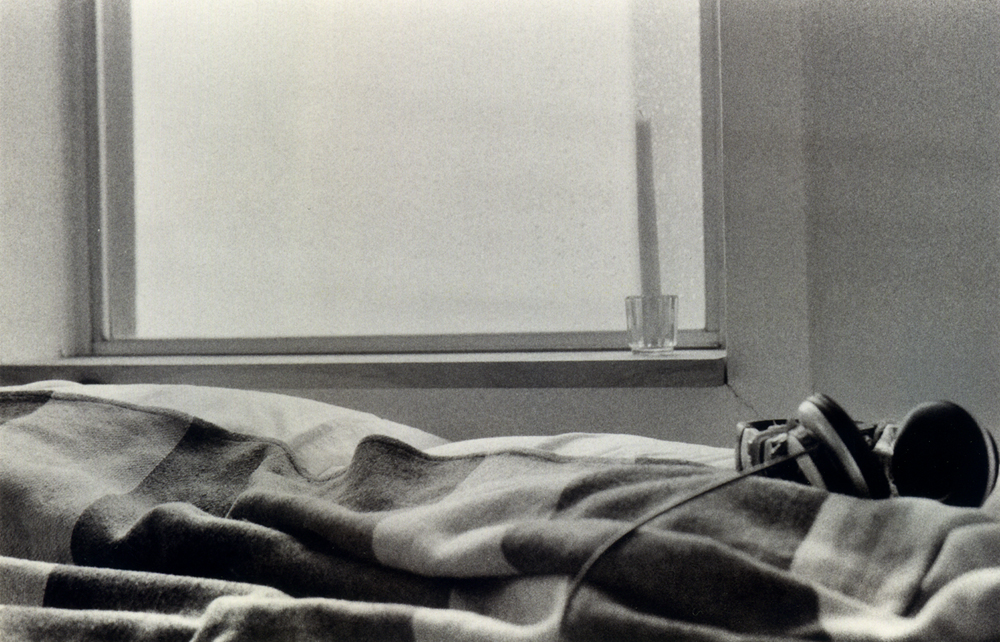
We have heard a story, indeed, of a painter in France who, when he wanted to paint a sea-beach, carried realism from his ends to his means, and plastered real sand upon his canvas (writes Robert Louis Stevenson. He continues:) Thus his scene was less a depiction of a thing and rather was the thing in itself, not transmuted into any artistic convention; or at least was an extension of the thing, made up of the very stuff of real life. (Stevenson breaks off writing at this point, smiles to himself, runs his fingers through his beard.)
One suspects – writes John Gardner, almost a hundred years later – that Stevenson may simply have made him up, this unnamed French painter. Stevenson’s purpose – Gardner continues – was to point out that literature exists on a continuum between poles, which he called ‘objective’ and ‘subjective’; and in order to give an illustration from the visual arts, he compared the French painter’s beachscapes with the effect of early- and middle-period Turner, whose landscapes were like vivid scenes seen through a window. Stevenson himself, of course, like most nineteenth century authors, occupied the subjective end of the spectrum, what we would now call ordinary, “realistic” fiction, where the writer’s intent is that the reader fall through the printed page into the scene represented – and, at this sudden point in Gardner’s essay, you can sense the seductive power this idea holds for him, his longing to be able to fall in precisely this way, to move freely through a language that is weightless, pure, utterly transparent.
Not so for Raymond Carver. For him, words have weight, solidity. Building a sentence is like building a wall with stones, Carver says, paraphrasing Flaubert. The stones have to be the right shape, he continues, the right size and heft to be wedged into place tight against other stones – he is fond, certainly, of metaphors to do with outdoors. Fishing, famously, is his favourite hobby. That, and drinking – something which John Gardner, his writing teacher at Chico State and a similarly prolific drinker, warns him about. Carver listens, nods his head, takes account. He hangs on Gardner’s every utterance, at this stage in his career – before, really, he even has a career. Later, in ‘Fires’, he will describe Gardner’s influence on his writing: “Telling me over and over how important it was to have the right words saying what I wanted them to say. Nothing vague or blurred, no smoked-glass prose”. But one day, following Gardner’s lead, he reads Robert Louis Stevenson’s preface to the complete works of Victor Hugo: no mention, despite what Gardner has claimed, of middle or late period Turner; no theories of objective versus subjective art. The unnamed French painter throwing sand onto his canvas is there, yes. But that is the only point that Gardner seems to have got right. And though it is not really all that important, though it is only a small, niggling thing, it is disappointment that lingers. Not that Carver ever mentions it to his former mentor, instead letting him go on making the same arguments about Stevenson and Turner and subjectivity in various interviews and lectures, letting him make a fool of himself. Eventually, Carver thinks, he’ll get round to telling him – right up to the day Gardner is killed horribly in a motorcycle accident. And so the thought always remains, jabbing at Carver like a splinter: was Gardner simply mistaken, perhaps misremembering what Stevenson actually wrote, or mixing up various different essays; or did he just make it all up?
As for myself, I don’t particularly care either way. Or so I tell myself, sitting at my desk in my small, functional apartment in New York. All these hermeneutic concerns seem a world away – all this business of literary accuracy, of reputations waxing and waning, of writers writing about writers. It’s just a distraction. It’s decadent, in fact, when you consider what else is going on in the world today.
I push my chair back, swivel around to the window, put my feet up to rest on the lip of the frame. I like that my desk is by the window. I like leaning back and looking out, across the huddled rooftops, and taking a moment to think things over. Through the single glazing, the sounds of the city rise up to me – all the usual morning sounds. Some unusual ones too. Bagpipes. But mainly traffic, rush-hour crowds, the buzz and chatter of voices. I imagine it all taking place, far below me – a typical slice of New York life. The sound of yellow taxicabs – beeping, revving, yelling. You know what I mean, you’ve seen it all before – a scene straight from a movie. The yellow sound of taxicabs – bright and piercing in the cold morning. You don’t need me to describe it all.
There’s nothing left to say. I suppose I could put in an abrupt ending, some unexpected, oddly poignant event – like the legions of Carver copyists out there. A sudden crash, perhaps, out in the street. But in fact there’s no need to make anything up. It’s all right in front of me.
There must be a building site nearby, some construction work a few blocks away, though I can’t see any cranes on the skyline, but how else do you explain it – because, there: carried by the wind, in little muddy heaps on the windowsill, and rain-etched swirls on the glass: sand.
I continue.
This post is based on the above sound work made by Seb Patane for A Moment of Eternal Noise from field recordings made in the Summer of 2011 in New York. Responding to the sound work Marc Hundley created the photograph and Gabriel Coxhead the text.

“I sense a confusion of means. Not that I’m criticizing. It was a daring thing you did, a daring thrust. To use him. I can admire the attempt even as I see how totally dumb it was, although no dumber than wearing a charm or knocking wood. Six hundred million Hindus stay home from work if the signs are not favorable that morning. So I’m not singling you out.”
“The vast and terrible depth.”
“Of course,” he said.
“The inexhaustibility.”
“I understand.”
“The whole huge nameless thing.”
“Yes, absolutely. “
“The massive darkness.”
“Certainly, certainly.”
“The whole terrible endless hugeness.”
“I know exactly what you mean.”
He tapped the fender of a diagonally parked car, half smiling.
“Why have you failed, Jack?”
“A confusion of means.”
“Correct. There are numerous ways to get around death. You tried to employ two of them at once. You stood out on the one hand and tried to hide on the other. What is the name we give to this attempt?”
“Dumb.”
I followed him into the supermarket. Blasts of color, layers of oceanic sound. We walked under a bright banner announcing a raffle to raise money for some incurable disease. The wording seemed to indicate that the winner would get the disease. Murray likened the banner to a Tibetan prayer flag.
“Why have I had this fear so long, so consistently?”
“It’s obvious. You don’t know how to repress. We’re all aware there’s no escape from death. How do we deal with this crushing knowledge? We repress, we disguise, we bury, we exclude. Some people do it better than others, that’s all.”
“How can I improve?”
“You can’t. Some people just don’t have the unconscious tools to perform the necessary disguising operations.”
“How do we know repression exists if the tools are unconscious and the thing we’re repressing is so cleverly disguised?”
“Freud said so. Speaking of looming figures.”
He picked up a box of Handi-Wrap II, reading the display type, studying the colors. He smelled a packet of dehydrated soup. The data was strong today.
“Do you think I’m some how healthier because I don’t know how to repress? Is it possible that constant fear is the natural state of man and that by living close to my fear I am actually doing something heroic, Murray?”
“Do you feel heroic?”
“No.”
“Then you probably aren’t.”
“But isn’t repression unnatural?”
“Fear is unnatural. Lightning and thunder are unnatural. Pain, death, reality, these are all unatural We can’t bear these things as they are. We know too much. So we resort to repression, compromise and disguise. This is how we survive in the universe. This is the natural language of the species.”
I looked at him carefully.
“I exercise. I take care of my body.”
“No, you don’t,” he said.
He helped an old man read the date on a loaf of raisin bread. Children sailed by in silver carts.
“Tegrin, Denorex, Selsun Blue.”
Murray wrote something in his little book. I watched him step deftly around a dozen fallen eggs oozing yolky matter from a busted carton.
“Why do I feel so good when I’m with Wilder? It’s not like being with the other kids,” I said.
“You sense his total ego, his freedom from limits.”
“In what way is he free from limits?”
“He doesn’t know he’s going to die. He doesn’t know death at all. You cherish this simpleton blessing of his, this exemption from harm. You want to get close to him, touch him, look at him, breathe him in. How lucky he is. A cloud of unknowing, an omnipotent little person. The child is everything, the adult nothing. Think about it. A person’s entire life is the unraveling of this conflict. No wonder we’re bewildered, staggered, shattered.”
“Aren’t you going too far?”
“I’m from New York.”
“We create beautiful and lasting things, build vast civilizations.”
“Gorgeous evasions,” he said. “Great escapes.”
The doors parted photoelectronically. We went outside, walking past the dry cleaner, the hair stylist, the optician. Murray relighted his pipe, sucking impressively at the mouthpiece.
“We have talked about ways to get around death.” he said. “We have discussed how you’ve already tried two such ways, each cancelling the other. We have mentioned technology, train wrecks, belief in an afterlife. There are other methods as well and I would like to talk about one such approach.”
We crossed the street.
“I believe, Jack, there are two kinds of people in the world. Killers and diers. Most of us are diers. We don’t have the disposition, the rage or whatever it takes to be a killer. We let death happen. We lie down and die. But think what it’s like to be a killer. Think how exciting it is, in theory, to kill a person in direct confrontation. If he dies, you cannot. To kill him is to gain life-credit. The more people you kill, the more credit you store up. It explains any number of massacres, wars, executions.”
“Are you saying that men have tried throughout history to cure themselves of death by killing others?”
“It’s obvious.”
“And you call this exciting?”
“I’m talking theory. In theory, violence is a form of rebirth. The dier passively succumbs. The killer lives on. What a marvelous equation. As a marauding band amasses dead bodies, it gathers strength. Strength accumulates like a favor from the gods.”
“What does this have to do with me?”
“This is theory. We’re a couple of academics taking a walk. But imagine the visceral jolt, seeing your opponent bleeding in the dust.”
“You think it adds to a person’s store of credit, like a bank transaction.”
“Nothingness is staring you in the face. Utter and permanent oblivion. You will cease to be. To be, Jack. The dier accepts this and dies. The killer, in theory, attempts to defeat his own death by killing others. He buys time, he buys life. Watch others squirm. See the blood trickle in the dust.”
I looked at him, amazed. He drew contentedly on his pipe, making hollow sounds.
“It’s a way of controlling death. A way of gaining the ultimate upper hand. Be the killer for a change. Let someone else be the dier. Let him replace you, theoretically, in that role. You can’t die if he does. He dies, you live. See how marvelously simple.”
“You say this is what people have been doing for centuries.”
“They’re still doing it. They do it on a small intimate scale, they do it-in groups and crowds and masses. Kill to live.”
“Sounds pretty awful.”
He seemed to shrug. “Slaughter is never random. The more people you kill, the more power you gain over your own death. There is a secret precision at work in the most savage and indiscriminate killings. To speak about this is not to do public relations for murder. We’re two academics in an intellectual environment. It’s our duty to examine currents of thought, investigate the meaning of human behavior. But think how exciting, to come out a winner in a deathly struggle, to watch the bastard bleed.”
“Plot a murder, you’re saying. But every plot is a murder in effect. To plot is to die, whether we know it or not.”
“To plot is to live,” he said.
I looked at him. I studied his face, his hands.
“We start our lives in chaos, in babble. As we surge up into the world, we try to devise a shape, a plan. There is dignity in this. Your whole life is a plot, a scheme, a diagram. It is a failed scheme but that’s not the point. To plot is to affirm life, to shape and control. Even after death, most particularly after death, the search continues. Burial rites are an attempt to complete the scheme, in ritual. Picture a state funeral, Jack. It is all precision, detail, order, design. The nation holds its breath. The efforts a huge and powerful government are brought to bear on a ceremony that will shed the last trace of chaos. If all goes well, if they bring it off, some natural law of perfection is obeyed. The nation itself is delivered from anxiety, the deceased’s life is redeemed, itself is strengthened, reaffirmed.”
“Are you sure?” I said.
“To plot, to take aim at something, to shape time and space. This is how we advance the art of human consciousness.”
We moved in a wide circle back toward campus. Streets in deep and soundless shade, garbage bags set out for collection. crossed the sunset overpass, pausing briefly to watch the cars shoot by. Sunlight bouncing off the glass and chrome.
“Are you a killer or a dier Jack?”
“You know the answer to that. I’ve been a dier all my life.”
“What can you do about it?”
“What can any dier do? Isn’t it implicit in his makeup that he can’t cross over?”
“Let’s think about that. Let’s examine the nature of the beast, so to speak. The male animal. Isn’t there a fund, a pool, a reservoir of potential violence in the male psyche?”
“In theory I suppose there is.”
“We’re talking theory. That’s exactly what we’re talking. Two friends on a tree-shaded street. What else but theory? Isn’t there a deep field, a sort of crude oil deposit that one might tap if and when the occasion warrants? A great dark lake of male rage.”
“That’s what Babette says. Homicidal rage. You sound like her.”
“Amazing lady. Is she right or wrong?”
“In theory? She’s probably right.”
“Isn’t there a sludgy region you’d rather not know about? A remnant of some prehistoric period when dinosaurs roamed the earth and men fought with flint tools? When to kill was to live?”
“Babette talks about male biology. Is it biology or geology?”
“Does it matter, Jack? We only want to know whether it is there, buried in the most prudent and unassuming soul.”
“I suppose so. It can be. It depends.”
“Is it or isn’t it there?”
“It’s there, Murray. So what?”
“I only want to hear you say it. That’s all. I only want to elicit truths you already possess, truths you’ve always known at some basic level.”
“Are you saying a dier can become a killer?”
“I’m only a visiting lecturer. I theorize, I take walks, I admire the trees and houses. I have my students, my rented room, my TV set. I pick out a word here, an image there. I admire the lawns, the porches. What a wonderful thing a porch is. How did I live a life without a porch to sit on, up till now? I speculate, I reflect, I take constant notes. I am here to think, to see. Let me warn you, Jack. I won’t let up.”
We passed my street and walked up the hill to the campus.
“Who’s your doctor?”
“Chakravarty,” I said.
“Is he good?”
“How would I know?”
“My shoulder separates. An old sexual injury.”
“I’m afraid to see him. I put the printout of my death in the bottom drawer of a dresser.”
“I know how you feel. But the tough part is yet to come. You’ve said good-bye to everyone but yourself. How does a person say good-bye to himself? It’s a juicy existential dilemma.”
“It certainly is.”
We walked past the administration building.
“I hate to be the one who says it, Jack, but there’s something that has to be said.”
“What?”
“Better you than me.”
I nodded gravely. “Why does this have to be said?”
“Because friends have to be brutally honest with each other. I’d feel terrible if I didn’t tell you what I was thinking, especially at a time like this.”
“I appreciate it, Murray. I really do.”
Don DeLillo, “White Noise,” 1985
Image – ‘Yuri Pavlovick Gidzenko,’ Test Cosmonaut of the Yuri Gagarin Cosmonaut Training Center, Russian Federal Space Agency
Kaivue – Vladislav Delay : The Decline of Western Civilisation – Tru West : I0 – Klangwart : Twasidich Wurde – Kleefstra/Pruiksma/Kleefstra : King of Clubs – Apparet : Dream II – Leafcutter John : Adikia – Ekkehard – Ehlers : Visible Breath – Eyvind kang : Stadich Lit Ik Dy Kalder Wurde – Kleefstra/Pruiksma/Kleefstra : Stilleben 187-88 – Kaija Saariaho : Henki – Vladislav Delay : Farnsworth House – Efdemin : Sixteenth – Autistici : 91 Mins

I must have been eight when, in a storeroom of our country house, among all kinds of dusty objects, I discovered some wonderful books acquired in the days when my mother’s mother had been interested in natural science and had had a famous university professor of Zoology (Shimkevich) give private lessons to her daughter. Some of these books were mere curios, such as the four huge brown folios of Albertus Seba’s work (Locupletissimi Rerum Naturalium Thesauri Accurata Descrqnio…), printed in Amsterdam around 1750. On their coarse-grained pages I found woodcuts of serpents and butterflies and embryos. The fetus of an Ethiopian female child hanging by the neck in a glass jar used to give me a nasty shock every time I came across it; nor did I much care for the stuffed hydra on plate CII, with its seven lion-toothed turtleheads on seven serpentine necks and its strange, bloated body which bore buttonlike tubercules along the sides and ended in a knotted tail.
Other books I found in that attic, among herbariums full of alpine columbines, and blue palemoniums, and Jove’s campions, and orange-red lilies, and other Davos flowers, came closer to my subject. I took in my arms and carried downstairs glorious loads of fantastically attractive volumes: Maria Sibylla Merian’s (1647-1717) lovely plates of Surinam insects, and Esper’s noble Die Sehmetterlinge (Erlangen, 1777), and Boisduval’s Ieones Historiques de Lépidoptéres Nou-veaux ou Peu Connus (Paris, begun in 1832). Still more exciting were the products of the latter half of the century – Newman’s Natural History of British Buttefflies and Moths, Hofmann’s Die Gross Sehmezterlinge Europas, the Grand Duke Nikolay Mihailovich’s Mémoires on Asiatic lepidoptera (with incomparably beautiful figures painted by Kavrigin, Rybakov, Lang), Scudder’s stupendous work on the Butterflies of New England.
Retrospectively, the summer of 1905, though quite vivid in many ways, is not animated yet by a single bit of quick flutter or colored fluff around or across the walks with the village schoolmaster: the Swallowtail of June 1906 was still in the larval stage on a roadside umbellifer; but in the course of that month I became acquainted with a score or so of common things, and Mademoiselle was already referring to a certain forest road that culminated in a marshy meadow full of Small Pearl-bordered Fritillaries (thus called in my first unforgettable and unfadingly magical little manual, Richard South’s The Butterflies of the British Isles, which had just come out at thattime) as le chemin des papillons bruns. The following year Ibecame aware that many of our butterflies and moths did notoccur in England or Central Europe, and more complete atlaseshelped me to determine them. A severe illness (pneumonia,with fever up to 41° centigrade), in the beginning of 1907,mysteriously abolished the rather monstrous gift of numbersthat had made of me a child prodigy during a few months(today I cannot multiply 13 by 17 without pencil and paper; Ican add them up, though, in a trice, the teeth of the three fitting in neatly); but the butterflies survived. My mother accumulated a library and a museum around my bed, and the longing to describe a new species completely replaced that of discovering a new prime number. A trip to Biarritz, in August 1907, added new wonders (though not as lucid and numerous as they were to be in 1909). By 1908, I had gained absolute control over the European lepidoptera as known to Hofmann. By 1910, I had dreamed my way through the first volumes of Seitz’s prodigious picture book Die Gross-Sehmetterlinge der Erde, had purchased a number of rarities recently described,and was voraciously reading entomological periodicals, especially English and Russian ones. Great upheavals were takingplace in the development of systematics. Since the middle of thecentury, Continental lepidopterology had been, on the whole, asimple and stable affair, smoothly run by the Germans. Its highpriest, Dr Staudinger, was also the head of the largest firm ofinsect dealers. Even now, half a century after his death, Germanlepidopterists have not quite managed to shake off the hypnoticspell occasioned by his authority. He was still alive when hisschool began to lose ground as a scientific force in the world.While he and his followers stuck to specific and generic namessanctioned by long usage and were content to classify butterfliesby characters visible to the naked eye, English-speaking authorswere introducing nomenclatorial changes as a result of a strictapplication of the law of priority and taxonomic changes basedon the microscopic study of organs. The Germans did theirbest to ignore the new trends and continued to cherish thephilately-like side of entomology. Their solicitude for the ‘average collector who should not be made to dissect’ is comparableto the way nervous publishers of popular novels pamper the‘average reader’ – who should not be made to think.
There was another more general change, which coincidedwith my ardent adolescent interest in butterflies and moths.The Victorian and Staudingerian kind of species, hermeticand homogeneous, with sundry (alpine, polar, insular, etc.)‘varieties’ affixed to it from the outside, as it were, like incidental appendages, was replaced by a new, multiform and fluidkind of species, organically consisting of geographical races orsubspecies. The evolutional aspects of the case were thusbrought out more clearly, by means of more flexible methodsof classification, and further links between butterflies and thecentral problems of nature were provided by biological investigations.The mysteries of mimicry had a special attraction for me.Its phenomena showed an artistic perfection usually ‘associatedwith man-wrought things. Consider the imitation of oozingpoison by bubblelike macules on a wing (complete with pseudorefraction) or by glossy yellow knobs on a chrysalis (‘Don’t eatme – I have already been squashed, sampled and rejected’).Consider the tricks of an acrobatic caterpillar (of the LobsterMoth) which in infancy looks like bird’s dung, but after moltingdevelops scrabbly hymenopteroid appendages and baroquecharacteristics, allowing the extraordinary fellow to play twoparts at once (like the actor in Oriental shows who becomes apair of intertwisted wrestlers): that of a writhing larva and thatof a big ant seemingly harrowing it. When a certain mothresembles a certain wasp in shape and color, it also walks andmoves its antennae in a waspish, unmothlike manner. When abutterfly has to look like a leaf not only are all the details of aleaf beautifully rendered but markings mimicking grub-boredholes are generously thrown in. ‘Natural selection,’ in the Darwinian sense, could not explain the miraculous coincidence ofimitative aspect and imitative behavior, nor could one appealto the theory of ‘the struggle for life’ when a protective devicewas carried to a point of mimetic subtlety, exuberance, andluxury far in excess of a predator’s power of appreciation. Idiscovered in nature the nonutilitarian delights that I soughtin art. Both were a form of magic, both were a game of intricateenchantment and deception.
This Exquisite Corspe started with the original piece of music ‘Don’t Pet the Slugs’ by Steven Mykietyn, Zuriel Waters and Takafumi Kosaka, Gabriel Hartley then made the painting ‘Slugs’ after hearing a section of it. A Moment of Eternal Noise picked the text by Vladimir Nabokov from the book ‘Speak Memory‘ given to us by Benjy Keating from Palimstry.

(About the size of a Book)
A Unitych is a unit made up of two identical parts. Each part is about the size of a book. It comprises a unit when both parts are separated and disseminated. If presented as a pair – casually assembled on a window ledge for instance – it would merely exist as a sum of components. Entirely dependant on each part’s separation, a Unitych is unique in requiring two persons to own it. One could have both parts in their possession of course, but in order for Unitych to function, the ownership needs to be split, 50/50 with another person. A Unitych unit dissolves if there is too larger distance between the componential parts. There is no actual yardstick, and different Unitychs behave differently. Many come into being by accident and each one behaves relatively to its owners’ predicaments.
In a meagre room, a barefooted woman is curled up on a chair staring at a wall. An object (about the size of a book) rests on a table. Should her gaze turn directly towards the object, she will not perceive a Unitych but only a componential sibling. She cannot stare at both at the same time, because the other part is in another meagre room, in another house, somewhere else. To see hers, she has to look away from the object, but too far and she’ll miss it. She might stare at the wall and only perceive the wall, or she might be staring at the wall but perceive a Unitych. If this were the case she does not see the wall at all and only perceives the Unitych.
For a Unitych can plunge surrounding objects and other matter into darkness. To see her own, she has to capture a distance, if she manages to capture this, then she can perceive her Unitych. A Unitych works very much like an old optical illusion. You know the type; you run your eyes over a grid of black and white squares, and a mesh of grey ones appear. You stop to focus, stagnantly, to deconstruct the trick, only to find as you do there is a slight oscillation anyway, and the little grey fuzzy squares break free and career all over your visual field.
In another meagre room, a barefooted woman is curled up on chair facing an object (about the size of a book) on a table. Her eyes are closed and her womb aches. Three small tears emit from dormant tear ducts and fall onto her lap. The drips fall with the same amount of time between each one and hit the same spot on her lap. On the third, she opens her eyelids. Two empty eye sockets meet the wall and at this point she sees her Unitych. Her mouth opens; her tongue tightens to reach the roof of her mouth. She squeezes some air from the depths of her lungs to make an O, a C, a U, and an L, a long A, and a quivering lower lip attempts an R.
In another meagre room, a barefooted woman is curled up staring at an object (about the size of a book) on the table. Her belly begins to ache, and the pain travels further down her abdomen to her vagaina, and into her anus. The pain in her womb intensifies. Paralysed in agony, she feels movement in her womb. The pain between her thighs is unbearable, and she feels a rush of fluid. She dares not look down, as two spherical objects, as soft and white as lychees emerge from her vagina. Drooling in fluid they fall neatly on to the chair. The woman clenches her eyes, and they begin to stream; one, two, three drops. She opens hers eyes on the third. Staring at the table, the object has vanished. She remains frozen, but she looks down between her thighs at the dribble around her lap. Two eyes stare back at her, and as all eyes meet, an object (about the size of a book) shifts into focus. Her stare darts over to the tabletop but the object has disappeared and by the time her glance returns to the set of eyes swimming in fluid, the object returns. Fixed still on the set of eyes, her mouth opens, and her tongue tightens to reach the roof of her mouth. She squeezes some air from the depths of her lungs to make an O, a C, a U, and an L, a long A, and a quivering lower lip attempts an R.
Invisible – Jean-Claude Risset : L’Imparfait Des Langues – Louis Sclavis : Armadillo Death – Rancho Shampoo : Mon Histoire – Michel Cloup : Cette Colere – Michael Cloup : Chat Noir – Le Pas du chat noir- Anouar Brahem : La Partition du Ciel et de l’Enfer – Philippe Manoury : The Hospital (The Eye of the Beholder) – Bernard Herrmann : The dance of the tutuguri – Antonin Artaud : String Quartet No. 3: III. Epilogue / Lullaby – Jefferson Friedman : Cave Song – Meredith Monk : Invisible – Jean-Claude Risset : Pictures of Matchstick Men – Status Quo : Espaces Inhabitables, I. – François Bayle : Dj la nuit – Anouar Brahem : On Top of The World – James – 65 Mins
This is an Exquisite Corpse. The music was selected by A Moment of Eternal Noise, an excerpt was sent to Simone Gigles who made the image ‘Kitty.’ The text was written by Cameron Irving based on that image.
1) Marburg. Project Harlequin. 03.11.39
In 1939 at the General Electric labs in Schenectady, New York they discovered the ability of dry ice shavings to convert supercooled water droplets (those existing as water at temperatures colder than freezing) to ice crystals and thus to water, with the addition of elements such as copper oxide the water could be colored. This combination would be injected into clouds using a convectional heating process that would manifest itself in the paths of jet streams propelling the clouds to Germany. When they reached precipitation point the rain would permanently stain any exposed skin.
2) Cuxhaven. The Badische Committee. 05.05.39
The communist organization Young Czechoslovakia proposed fake German fashion houses. Here gangs of secret Jewish tailors would make special low cost Nazi uniforms which would fit perfectly when first worn but would then inhibit the movements when the wearer ran or lifted their arms above elbow height. Each garment and accessory was designed to inhibit a specific task such as a belt which would tighten when loading a rifle or a smoking jacket that constricted blood flow in the right arm making writing an uncomfortable and difficult procedure.
3) Wartburg. The Salar League. 14.08.42
The Dutch created vast animal hospitals and developed animal training centers in Ireland. Using rigorous advanced techniques they hoped to combine several instincts into one animal. Echolocation from bats was taught to rats. The sensitivity of a spider’s legs was taught to horses. The hibernation habits of bears were taught to owls. In the Rhine a salmon and a tiger shark were cross bred, implanted with organic sonar amplifiers. Bombs were mounted onto and sometimes into their bodies. They attempted to combine the salmon’s homing skills with a shark’s instinct for detecting noises and electrical signals to create living weapons. Boats have large electrical ‘footprints’ which they assumed could easily be taught to the fish. It was hoped they could be trained to hunt and destroy specific targets.
4) Berlin. The Red Ribbon. 12.10.43
In the outer Hebrides a farmers collective was approached, they favored using special sheep breeding techniques and the meat sent into Germany disguised as Red Cross packs that had accidentally been dropped in the wrong areas. The meat contained massive amounts of untraceable hormones that would cause mass impotency.
5) Kassel. League of Biblio-Terorism. 22.04.43
The Russian’s had their sights set on the Nazi education system. The National Socialists completely changed the schooling system in Germany, aggressively vetting teachers, encouraging pupils to inform on them, rewriting history and adding anti-Semitic and anti-Marxist twists to historical accounts. Large amounts of new text books, learning materials and teachers had to be found. The short time frame needed to create this new system created many loop holes that the Russians wanted to exploit. They focused on hiding secret messages within the books using subtle diagrams and compositions they believed would effect the children’s development. Subliminal messages would be hidden in the educational films. Colors the Russians believed would effect the children’s sub-conscious were especially favored. Secret backward chants and messages were hidden in the gramophone records of marching bands. In physical education which comprised 15% of their total class time the children where made to run in shapes and patterns that would create indelible mental symbols of anti-Nazi propaganda. The Russians believed the arrangement of these positive mental symbols would effect the children’s subconscious in such a way as to make identification with the Nazi’s graphic symbolism impossible.
6) Soest. The Zeuss Factory. 30.03.44
In occupied France the Brittany Resistance were interested in the factory owners and managers. They infiltrated these Nazi owned business and secretly proposed a radical redesign of everyday objects. A bathtub that was so slippery the user could almost never get out of it. Concrete made so impure that it would disintegrate in the rain. A special bicycle cog set based on the concept of half-step gearing was created by altering original blueprints. Here a simultaneous front and rear shift change was necessary to move through the gears. At the lowest gear the chain was designed to fall off the cog just at the point the rider reached top speed in the hope of causing a fatal accident.
7) Schwerin. The Quinton Study. 19.11.1945
The Quinton Study in Schwerin was a group named after the famous canine sea water experiments conducted by René Quinton in the late 19th Century. The American animal laboratories had found a way of teaching dogs excellent tracking skills and homing instincts from pigeons and coyotes that they would use to triangulate their position on targets. The canines were flown in and parachuted about 10 kilometers from the desired target. The dogs would live off the land while they slowly closed in. When they got within a kilometer they could communicate using coyote calls. Then at a specific time they would attack. Even the actual method of carrying out the assassination was an instinct taken from another animal. The dogs were taught to copy the feeding habits of crocodiles and their jaw muscles operated on to promote extra muscle development, their teeth removed and replaced with ceramic blades. Their coats would be washed daily in a chemical mixture created to streamline and camouflage the animal. Finally the dogs were taught to entirely eat their kill.
This text by A Moment of Eternal Noise features an original score by Paul Gulati and is edited by Kelly Kludt.
 A MOMENT OF ETERNAL NOISE